Brief Introduction
In the United States, hospitals lose over $4,000 per bed annually on average due to equipment loss, misplacement, and inefficient use. This is not just an annoying story about "finding an infusion pump"; it is a severe operational and financial challenge: it leads to idle capital assets, equipment shortages during emergencies, unnecessary duplicate purchases, and may ultimately affect the timeliness of patient care. In an industry where efficiency is vital, traditional management methods relying on human memory and handwritten lists are no longer sustainable. Fortunately, RFID (Radio Frequency Identification) technology-based medical equipment tracking solutions are becoming the key to solving this dilemma. By implementing a mature system, healthcare institutions can increase the utilization rate of critical medical equipment by 40%, reduce capital expenditure requirements by 15-20%, and build a safer, more efficient, data-driven operating environment. This article will provide an in-depth look at this transformative technology.
1. Five Core Pain Points of Traditional Medical Equipment Management
Before exploring solutions, we must clearly define the problem. Why is hospital equipment management so difficult?
Asset "Invisibility" and High Search Time Costs: Hospitals own thousands to tens of thousands of movable devices, from monitors to wheelchairs. They are scattered across hundreds of rooms and departments. Medical staff spend an average of 20-30 minutes daily searching for equipment—time that should be used for patient care. According to the American Journal of Nursing, up to 20% of clinical time is wasted searching for supplies and equipment.
Lack of Preventive Maintenance and Calibration Management: Many high-value medical devices (e.g., ventilators, defibrillators) require regular maintenance and calibration to ensure safety and compliance. Manual record-keeping of maintenance dates is prone to errors or omissions, potentially leading to equipment failure at critical moments or compliance risks.
Broken Sterilization Tracking Chain: For items requiring strict sterilization, like surgical instruments, tracking the last sterilization time, location, and cycle is crucial. Manual tracking cannot provide reliable audit trails, posing infection control risks.
Unclear Utilization of Leased Equipment and Assets: Hospitals often lease expensive equipment (e.g., mobile C-arms) for short-term needs. However, the lack of real-time location and usage data makes accurate billing or optimization of leasing strategies difficult. Simultaneously, the true utilization rate of in-house equipment remains unknown, creating the paradox of "idling on one side while purchasing on the other."
Time-Consuming, Labor-Intensive, and Inaccurate Inventory Counting: Annual or quarterly manual inventory counts require closing departments, mobilizing significant manpower, and the results are often still inaccurate, failing to serve as a reliable basis for financial and operational decisions.
2. RFID Technology Principle Analysis – How Do Wireless "ID Cards" Work?
RFID is not science fiction but a mature, reliable automatic identification technology. Its core consists of three parts:
RFID Tag: A microchip and antenna attached to the equipment. The tag stores the device's unique ID number and writable information (e.g., model, purchase date). Tags are divided into Passive and Active types. Passive tags are small, low-cost, powered by radio waves from the reader to transmit data back, suitable for inventory counting and cabinet management. Active tags have an internal battery, can actively transmit signals over long distances (up to 100 meters), enabling real-time location tracking, suitable for high-value mobile equipment.
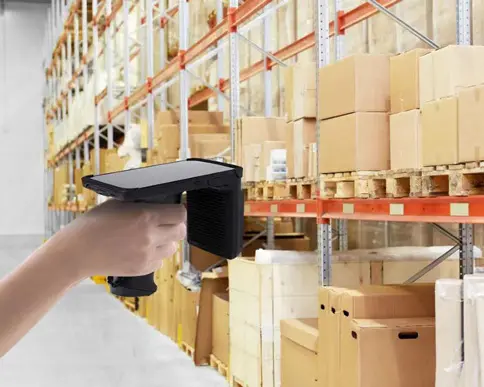
RFID Reader: Fixed installations in key areas (e.g., doorways, ceilings, walls) or handheld mobile types. They emit radio waves to "wake up" the tags and receive the data returned by the tags, then transmit it to the backend system via the network.
RFID Middleware and Application Software: This is the brain of the system. It processes the massive data from the readers, converts it into meaningful business information (e.g., equipment location, movement history, inventory status), and integrates it into the hospital's asset management system, ERP, or CMMS (Computerized Maintenance Management System).
3. Architecture of a Complete RFID Medical Equipment Tracking Solution
A complete solution involves much more than just attaching tags. It is a system deeply integrated with hardware, software, and business processes.
Hardware Layer Planning and Deployment:
Tag Selection and Attachment: Choose passive or active tags based on equipment value, movement frequency, and environment (e.g., need for liquid resistance, withstand high-temperature sterilization). Attach them professionally to ensure firmness without affecting equipment use and sterilization.
Reader Network Deployment: Deploy fixed readers at key nodes like building entrances, floor passages, department doors, operating rooms, Central Sterile Supply Departments (CSSD), and storerooms to form a positioning "grid." Equip inventory teams with handheld readers.
Software Platform Core Functions:
Real-Time Location System (RTLS) Dashboard: Displays the location of all tagged equipment in real-time on a campus map, with accuracy up to room-level or zone-level.
Intelligent Search and Navigation: Enter the equipment name or number, and the system immediately shows its current location and can provide the nearest route to that point.
Automated Inventory Management and Counting: Handheld readers can complete equipment counting for a room or an entire floor in minutes, with accuracy exceeding 99.9%. Fixed readers enable automatic registration of storeroom entries and exits.
Automated Maintenance and Sterilization Cycle Alerts: The system automatically triggers maintenance work orders or updates sterilization status based on equipment usage time or records of movement to the sterilization center, and flags overdue equipment.
Utilization Analysis and Reporting: Generates in-depth reports showing usage duration, idle time, and flow hotspots for each equipment type, providing data insights for procurement, leasing, and resource allocation.
System Integration: Seamlessly integrates with the hospital's HIS (Hospital Information System), financial asset system, and equipment maintenance system via APIs, ensuring data unity and process closure.
4. Application Scenarios
Theory is gray, but the tree of practice is evergreen. Let's see how specific scenarios are transformed:
Scenario 1: Emergency Room Rescue. A critically ill patient is admitted, urgently needing a portable ultrasound machine. The head nurse doesn't need to make phone calls; she simply searches on the RTLS screen or mobile terminal. The system shows the machine is in Room 312 on the 3rd floor, used 10 minutes ago, with sufficient battery and normal maintenance status. Someone is immediately sent to retrieve it, saving precious time for the rescue.
Scenario 2: Operating Room Efficiency. By tracking surgical instrument trays, the CSSD knows precisely the location and status (sterilized/in use/awaiting collection) of each tray, ensuring smooth surgical transitions and reducing table idle time caused by waiting for instruments.
Scenario 3: Asset Financial Optimization. The hospital plans to purchase a batch of new infusion pumps. The finance department pulls up an RFID system report, showing that the average utilization rate of the existing 150 infusion pumps is only 55%, and 20 of them have been idle long-term in a rarely used department. Therefore, the decision is adjusted: internally relocate 10 units, purchase only 40 necessary new devices, and optimize scheduling rules. This single action could directly save hundreds of thousands of dollars in capital expenditure.
5. Practical Guide for Choosing an RFID Solution Provider
Choosing the right partner is key to success. Evaluate based on the following dimensions:
Industry Specialization and Experience: Does the supplier specialize in the healthcare sector? Can they provide references from similar hospitals? Ask them to demonstrate successful deployment experience in hospitals of similar scale and complexity.
Maturity and Flexibility of the Technical Solution:
- Can they provide a hybrid (passive + active) tag solution to suit different assets?
- What is the positioning accuracy? Can it meet different needs like room-level, cabinet-level?
- How scalable is the system and its ability to integrate with existing mainstream hospital systems?
- Project Deployment and Support Services: Does the supplier have a professional project implementation team? Can they provide end-to-end services from site survey, process analysis, system design, installation, debugging, to full staff training? Is the after-sales technical support timely and localized?
- Commitment to Compliance and Security: Does the solution comply with healthcare data security and privacy regulations (e.g., HIPAA)? Do the equipment tags meet the tolerance requirements for sterilization?
6. Case Study: Peking University Shenzhen Hospital – Optimized Application of RFID Readers in Asset Management
Peking University Shenzhen Hospital is a comprehensive public tertiary hospital integrating medical treatment, scientific research, and education. Established in 1999 (originally named "Shenzhen Central Hospital"), it officially joined the Peking University Affiliated Hospital management system in 2000, marking the deepening of university-hospital cooperation. As a modern hospital, its operations rely on efficient asset management, but the original system suffered from low integration, urgently needing technological upgrade to support large-scale asset circulation.
Challenges:
- Low System Integration Leading to Information Silos: Asset data from various departments was stored independently, lacking a unified platform, hindering cross-departmental collaboration and data sharing.
- Outdated Inventory Management Technology: Reliance on traditional manual ledger records for asset information resulted in cumbersome processes and high error rates, reducing overall work efficiency.
- Insufficient Utilization of Asset Data: Manual ledgers made real-time updates and analysis difficult, causing asset operational data (e.g., utilization rate, maintenance records) to fail in effectively supporting decision-making, leading to low asset utilization.
Solution
The project established a complete full-lifecycle asset management system by introducing RFID reader technology:
- Technical Core: Utilized RFID reading/writing equipment to achieve automated tracking of assets through stages from incoming inventory, allocation, borrowing, transfer, maintenance to decommissioning and disposal.
- Process Integration: Deeply integrated physical asset management with financial management modules, supporting real-time data synchronization and covering needs like statistics and analysis.
- Departmental Collaboration: Connected the asset management department, user departments, and finance department through the RFID system, eliminating information barriers and enhancing operational transparency.
Results
- Enhanced Management Standards: Automated data collection reduced manual intervention, improving the accuracy and standardization of asset management.
- Optimized Efficiency: Asset inventory speed significantly increased, solving the inefficiency problem of the traditional model and improving asset turnover.
- Cost Control: Reduced resource waste caused by manual errors and optimized asset allocation through data-driven decision-making.
- Scalability: The solution laid the foundation for the hospital's subsequent digital upgrades, supporting further integration with other systems (e.g., finance, ERP).
Implementing an RFID medical equipment tracking solution holds significance far beyond "preventing loss." It is a core component of hospital digital transformation, turning static, vague asset inventory into dynamic, visible, intelligently analyzable strategic data assets. It directly empowers frontline clinical staff, returning time to medical personnel and patients; it empowers operational management, ensuring every capital investment is fully utilized; and it ultimately empowers hospital leadership to make wiser strategic decisions based on real-time, accurate data. Investing in such a system is not just an investment in technology, but an investment in more efficient operations, safer care, and a more sustainable future.
- Demystifying Manual Traceability Pains: How CRUISE2 5G Enables Barcode-Based Bidirectional Traceability2026-04-03
- Demystifying Slow Backroom Transfers: How UTouch 2-S Enables Second-Level Inventory Navigation2026-04-03
- Demystifying Quality Control Bottlenecks: How RFID Moves Towards Proactive Prevention2026-04-02
- How Handheld Computers Achieve End-to-End Traceability2026-04-02
- Demystifying Workstation Information Bottlenecks: How CRUISE2 5G Enables Paperless, Real-Time Operations2026-04-01