Brief Introduction
In the healthcare industry, the complexity of workflows and patient safety risks have always been core challenges. As the wave of digital transformation sweeps across the globe, medical mobile devices are becoming key tools for improving efficiency and safety. Imagine a busy infusion hall where nurses face the risk of misadministration due to the large number of patients; or during examinations, delays in information transfer lead to nursing errors. These pain points not only affect the quality of medical care but may also endanger patients' lives. This article will take an in-depth look at how medical mobile devices are reshaping medical services. Through the successful case study of Beijing Xuanwu Hospital, it analyzes the background, challenges, and solutions, and recommends the SEUIC CRUISE2 5G Rugged Mobile Computer, providing practical references for healthcare workers. Whether you are a hospital administrator, nursing staff, or a professional in a related industry, this article will reveal practical experience in digital transformation.
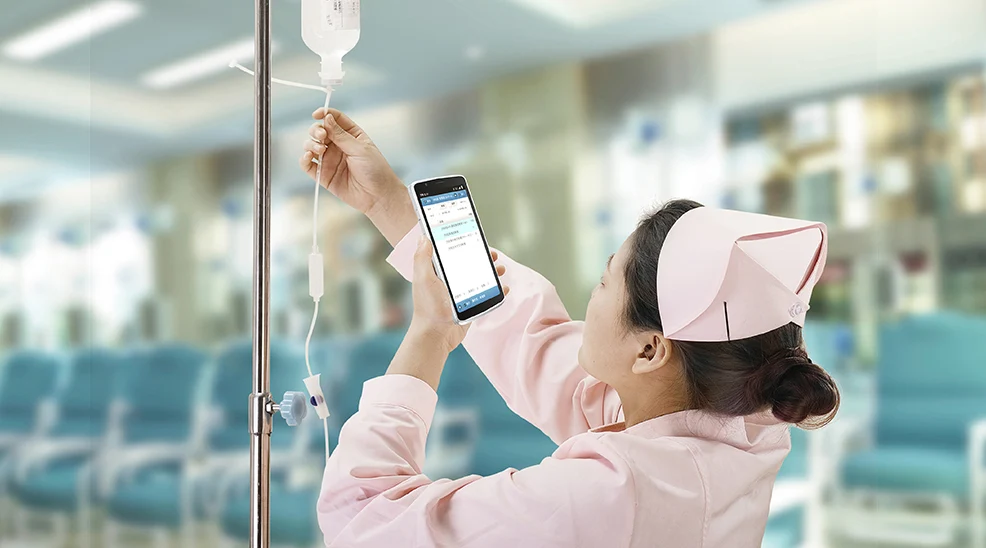
1. Why Mobile Devices Are Reshaping Medical Services
The healthcare industry is undergoing a quiet revolution. Mobile devices, leveraging their portability, real-time data processing capabilities, and connectivity, are fundamentally changing traditional work models. From patient registration to medication management, mobile devices reduce human errors through digitalized processes and improve response speed. For example, in busy hospital environments, mobile computers allow nurses to scan patient barcodes in real-time, ensuring medication accuracy; meanwhile, cloud-synced data supports remote collaboration, enhancing overall care quality. Statistics show that medical institutions adopting mobile devices can increase work efficiency by up to 30% and significantly reduce the incidence of medical errors. This transformation stems not only from technological advantages but also from a core focus on patient safety—mobile devices minimize the risk of human error through automated verification processes.
Furthermore, mobile devices support Medical Internet of Things (IoT) integration, enabling device interconnectivity and intelligent alerts. For instance, sensors can monitor patient vital signs and send immediate alerts for abnormalities via mobile terminals. This integration allows for more efficient allocation of medical resources, particularly suitable for emergency and chronic disease management scenarios. With the proliferation of 5G technology, the low latency and high bandwidth of mobile devices further enhance telemedicine capabilities, allowing patients in remote areas to access top-tier medical services. In summary, mobile devices are no longer simple tools but the cornerstone of healthcare digital transformation, driving the industry towards a smarter and safer direction.
2. In-Depth Case Study: The Transformation Journey of Beijing Xuanwu Hospital
Beijing Xuanwu Hospital, a Grade III, Class A general hospital affiliated with Capital Medical University, has focused on neurology and geriatric treatment since its establishment in 1958, enjoying a high reputation particularly in the field of cardiovascular and cerebrovascular diseases. The hospital undertakes multiple functions including medical care, teaching, and scientific research, with a huge daily patient flow. Challenges are especially prominent during peak infusion hours. The following is a detailed analysis of the hospital's transformation through medical mobile devices.
Background
Xuanwu Hospital is a comprehensive institution integrating medical care, prevention, and healthcare, with an annual patient volume exceeding one million visits. The infusion hall, as a high-traffic area, can handle over 200 infusion cases per day during peak hours. However, the traditional workflow relied on manual calling and verification, leading to low efficiency. The hospital urgently needed an innovative solution to optimize the process and ensure patient safety.
Challenges
The core challenge faced by the hospital was the mismatch between patient volume and nursing resources. During the infusion process, nurses had to verbally call patient names for verification, but due to the noisy environment, mishearing or misidentification easily occurred. Incorrect patient responses could lead to medication incidents. Additionally, nurses were overburdened, struggling to balance efficiency and accuracy during peak hours, which not only increased operational risks but also reduced patient satisfaction. At the management level, the lack of real-time data support hindered accurate performance evaluation and process optimization.
Pain Points
Specific pain points included: First, high safety risks - manual verification easily led to wrong infusions, posing potential medical incident risks; Second, efficiency bottlenecks - nurses spent excessive time on calling and verification, affecting overall nursing progress; Third, data opacity - traditional methods couldn't statistically track infusion data, hindering management decisions; Fourth, poor patient experience - chaotic processes prolonged waiting times, causing dissatisfaction. These pain points highlighted the urgency of digital transformation.
Solution
Xuanwu Hospital introduced SEUIC mobile computers to create an intelligent infusion system. Nurses use mobile devices to scan patient wristband barcodes, automatically matching infusion information and eliminating the possibility of misadministration. The system integrates a call function, reducing verbal calls through message prompts and improving response speed. Meanwhile, data is uploaded to the cloud in real-time, supporting management in performance analysis and resource allocation. After implementation, the infusion error rate decreased, nurse work efficiency improved, and patient satisfaction significantly increased. This solution not only addressed immediate pain points but also laid the foundation for the hospital's long-term digital construction.
3. Medical Mobile Device Recommendation: CRUISE2 5G Rugged Mobile Computer
In medical scenarios, equipment needs to balance durability, high performance, and ease of use. The SEUIC CRUISE2 5G rugged mobile computer, with its advanced technology, is an ideal choice. This device is designed for demanding environments, supporting 5G and Wi-Fi 6E connectivity to ensure fast and stable data transmission. In medical applications, it can be used for medication management, patient information verification, and remote consultations. Its high-speed scanning function (capable of reading barcodes as small as 3Mil) can accurately read soiled or damaged barcodes, reducing operational errors.
Core advantages include:
- High-Performance Processing: Equipped with Qualcomm 4490 CPU and Android 13 OS, ensuring smooth operation of medical applications;
- Strong Connectivity: 5G speeds are 10 times faster than 4G, and Wi-Fi 6E offers triple the transmission rate of the previous generation, suitable for large data transfers;
- Long Battery Life: The 5000mAh battery supports 12 hours of continuous use, with a hot-swappable design ensuring uninterrupted operation;
- Rugged and Durable: Dustproof and waterproof design, adaptable to the variable hospital environment.
4. How to Choose Suitable Medical Mobile Devices: Professional Advice
When selecting medical mobile devices, it is necessary to comprehensively consider security, compatibility, and Total Cost of Ownership (TCO). First, devices should pass medical-grade certifications to ensure data encryption and infection-prevention design; second, prioritize devices that support mainstream medical software, such as Electronic Health Record (EHR) system integration; finally, evaluate the TCO – the TCO of the CRUISE2 5G is about half that of consumer smartphones, offering high long-term cost-effectiveness. It is recommended that hospitals conduct field tests before procurement and customize solutions based on specific scenario requirements.
Medical mobile devices are evolving towards AI integration and edge computing, with the future aiming for smarter predictive care. The case of Xuanwu Hospital proves that digital
transformation can not only improve efficiency but also strengthen safety defenses. As practitioners, embracing mobile technology is an inevitable choice.
Founded in 2002, SEUIC Technologies Co., Ltd. has been committed to grasping core technologies, enhancing technological innovation, providing excellent self-owned brand products, including mobile computers, RFID readers, tablets, barcode scanners and fixed readers. With highly reliable products and efficient services, our products have been widely used in manufacturing, retail, logistics & transportation, healthcare and other industries. We provide frontline workers more durable real-time data collection tools, helping you do more thereby to catapult your productivity to the next level.
- Demystifying Manual Traceability Pains: How CRUISE2 5G Enables Barcode-Based Bidirectional Traceability2026-04-03
- Demystifying Slow Backroom Transfers: How UTouch 2-S Enables Second-Level Inventory Navigation2026-04-03
- Demystifying Quality Control Bottlenecks: How RFID Moves Towards Proactive Prevention2026-04-02
- How Handheld Computers Achieve End-to-End Traceability2026-04-02
- Demystifying Workstation Information Bottlenecks: How CRUISE2 5G Enables Paperless, Real-Time Operations2026-04-01