Brief Introduction
In today's fast-paced logistics industry, the accuracy and efficiency of parcel tracking are directly related to customer satisfaction and operational costs. However, traditional barcode technology is prone to damage and has slow read speeds, leading to frequent errors and delays. With the maturity of Radio Frequency Identification (RFID) technology, it is becoming a revolutionary tool for logistics parcel tracking, enabling real-time, batch reading and significantly enhancing visibility. This article serves as a complete 2026 guide, based on industry practices, to provide a detailed analysis of the entire RFID integration process, helping you easily tackle future challenges from preparation to implementation. Whether you are a logistics manager, warehouse operator, or retail chain supervisor, you can find practical insights.
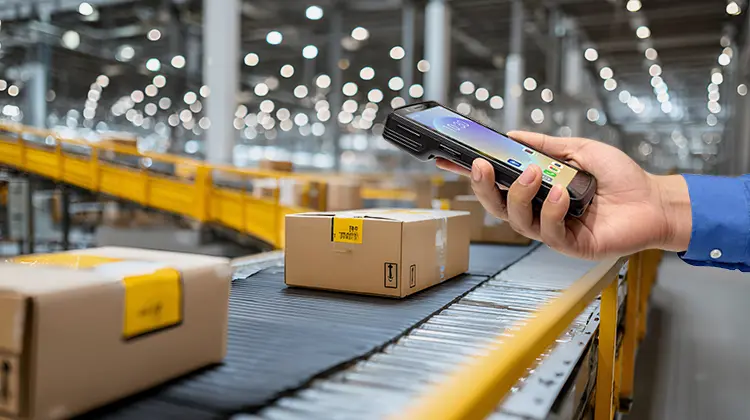
1. The Value of RFID Technology in Logistics
RFID technology automatically identifies tag information via radio frequency signals, enabling batch reading without line-of-sight, demonstrating significant value in logistics parcel tracking:
Improved Efficiency: Traditional barcodes can only scan one item at a time, whereas RFID can read hundreds of tags per second, speeding up sorting and inbound processes.
Enhanced Accuracy: RFID tags are less prone to soiling, reducing human error and ensuring real-time inventory data updates.
Cost Reduction: Automated tracking reduces labor input and the risk of parcel loss.
Furthermore, RFID supports full lifecycle tracking, from supplier to end-customer, achieving end-to-end visibility. This is particularly important for e-commerce logistics and courier companies, enabling quick parcel location and reducing complaints. With the development of the Internet of Things (IoT), the combination of RFID and AI will further optimize predictive analytics, laying the foundation for intelligent logistics in 2026.
2. Integration Preparation Phase
Adequate preparation is key to success before initiating RFID integration. This phase involves assessing the current situation, setting goals, and forming a team.
Assess Current System: First, analyze the pain points of the existing tracking process, such as error rates and read speed bottlenecks. For example, if your warehouse still relies on manual scanning, prioritize RFID integration in high-traffic areas. Use tools like process mapping to identify areas for improvement.
Set Clear Goals: Define the purpose of integration, such as increasing read accuracy to 99.9% or reducing parcel processing time by 30%. Goals should be specific, measurable, and aligned with business strategy.
Form a Cross-Functional Team: Include IT specialists, logistics operators, and financial personnel to balance technical feasibility and cost-effectiveness. Simultaneously, budget planning should cover hardware, software, and training costs. RFID integration requires a high initial investment but offers significant long-term ROI; pilot testing is recommended to verify effectiveness.
Technical Selection Preparation: Choose suitable RFID frequency (e.g., UHF for long-range reading), tag types (metal-resistant or waterproof tags), and reader/writer equipment.
3. 5-Step Implementation Process
RFID integration requires systematic progression. The following 5-step process, based on best practices, helps achieve efficient implementation.
3.1 Requirements Analysis and Planning
Conduct an in-depth analysis of business needs to determine the integration scope (e.g., entire warehouse or specific links). Collaborate with suppliers to customize solutions. Key activities include:
Conducting site surveys to assess environmental factors (e.g., metal interference).
Creating a timeline and setting milestones.
3.2 Hardware and Software Deployment
Select reliable hardware, such as UHF readers/writers, tags, and middleware.
Install readers/writers at strategic locations, such as conveyor belts or entrances.
Configure the software platform for integration with existing ERP or WMS systems.
3.3 Tag Application and Testing
Affix RFID tags to parcels, ensuring secure attachment and accurate information encoding.
Conduct read tests to validate coverage and accuracy. Testing includes simulating real scenarios like batch reading and reading while moving; adjust reader/writer power (controllable 1-30dBm) to optimize performance.
3.4 Staff Training and Process Optimization
Train staff on using new equipment, emphasizing RFID advantages. User-friendly device design, like wave-grooved non-slip grips, reduces the learning curve.
Simultaneously, optimize operational processes: Revise Standard Operating Procedures (SOPs) to integrate RFID reading steps. Encourage feedback for continuous improvement.
3.5 Go-Live and Monitoring
After official launch, monitor system performance in real-time, using data analysis tools to track KPIs like read rate and error rate.
Conduct regular audits to ensure system stability.
4. SEUIC Solution Recommendation
For logistics parcel tracking scenarios, the SEUIC Technologies AUTOID UTouch 2-S handheld device is an ideal choice, combining durability, high performance, and easy integration characteristics to assist enterprises in digital transformation.
Core Device Advantages:
Excellent Reading Capability: Equipped with a 0.5 dBi high-sensitivity antenna, UHF reading range up to 6 meters frontally and 3 meters vertically, supporting 700 batch reads per second, meeting high-intensity demands like express sorting.
Durable and Portable: Complies with IP68 dust and water resistance standards, withstands drops from 1.8 meters, weighs only 325 grams, suitable for prolonged use by frontline staff.
Advanced Connectivity: Integrated Wi-Fi 6 technology ensures stable data transmission, reducing power consumption and network costs.
User-Friendly Design: Top NFC facilitates card reading, dual cameras support barcode and image capture, enhancing versatility.
Success Case Sharing:
China Eastern Airlines: Adopted SEUIC UTouch devices for full-process baggage tracking, achieving efficient management. The lightweight design combined with a dedicated backpack reduces staff burden and has received positive customer feedback. For more case details, please click here.
Renrenzan: Used UTouch 2-S for rapid tracking of clothing from collection to washing; read speed improved operational efficiency. For more case details, please click here.
These cases prove that RFID integration can shorten processing times, reduce error rates, and the investment payback period is typically 12-18 months.
Return on Investment (ROI) Analysis:
The initial investment for RFID integration includes equipment, tags, and software (approximately several thousand RMB per device), but long-term benefits are significant. For example, it can reduce manual scanning costs by 20%, decrease parcel loss rate by 15%, and enhance customer loyalty. According to industry data, the average ROI for RFID projects exceeds 200%.
5. Common Challenges and Solutions
RFID integration may encounter challenges, but advance planning can effectively resolve them.
Challenge 1: Tag Interference or Missed Reads - Metal or liquid environments can weaken signals. Solution: Choose metal-resistant tags and optimize reader/writer placement.
Challenge 2: Complex System Integration - Compatibility issues with legacy systems. Solution: Seek device software that supports upgrades to effectively avoid incompatibility issues.
Challenge 3: Cost Concerns - High initial investment. Solution: Implement in phases, starting with a pilot before expansion.
Challenge 4: Employee Resistance to Change - Insufficient training leads to usage difficulties. Solution: Combine practical training to demonstrate how RFID reduces workload.
By addressing these issues, enterprises can smoothly transition to the RFID era.
RFID integration is the future path for logistics parcel tracking, enhancing efficiency, accuracy, and visibility. Through the 5-step process in this guide, you can implement it systematically, with the SEUIC AUTOID UTouch 2-S device as a reliable partner providing end-to-end support. Digital transformation waits for no one—optimize your logistics chain now!
Founded in 2002, SEUIC Technologies Co., Ltd. has been committed to grasping core technologies, enhancing technological innovation, providing excellent self-owned brand products, including mobile computers, RFID readers, tablets, barcode scanners and fixed readers. With highly reliable products and efficient services, our products have been widely used in manufacturing, retail, logistics & transportation, healthcare and other industries. We provide frontline workers more durable real-time data collection tools, helping you do more thereby to catapult your productivity to the next level.
- Demystifying Manual Traceability Pains: How CRUISE2 5G Enables Barcode-Based Bidirectional Traceability2026-04-03
- Demystifying Slow Backroom Transfers: How UTouch 2-S Enables Second-Level Inventory Navigation2026-04-03
- Demystifying Quality Control Bottlenecks: How RFID Moves Towards Proactive Prevention2026-04-02
- How Handheld Computers Achieve End-to-End Traceability2026-04-02
- Demystifying Workstation Information Bottlenecks: How CRUISE2 5G Enables Paperless, Real-Time Operations2026-04-01