Brief Introduction
Their versatility and efficiency make them a vital tool for modern businesses. In this article, we will explore the key components of mobile computers and their diverse functionalities to provide a comprehensive understanding of these devices.
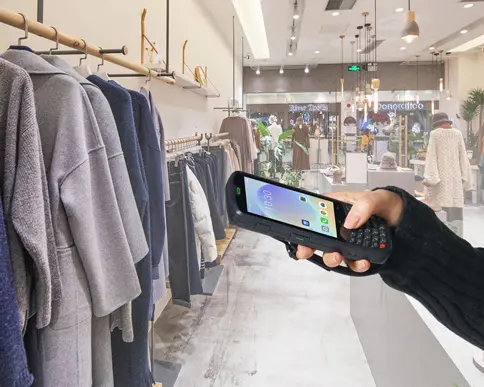
1. Core Components of Mobile Computers
Mobile computers are designed for efficient data collection and processing on the go. Their architecture consists of the following essential components:
1.1 Processor (CPU)
The CPU serves as the brain of mobile computers, handling all computational tasks. Most mobile computers use ARM-based processors due to their optimal balance between power efficiency and performance. A high-performance CPU enables smooth multitasking and supports complex applications, ensuring a seamless user experience.
1.2 Memory & Storage
Mobile computers are equipped with RAM for active processes and ROM for firmware storage. Higher RAM capacity improves responsiveness, while expandable storage (via microSD slots) allows users to store large amounts of data and applications.
1.3 Display Screen
The touchscreen display is the primary user interface, enabling intuitive navigation. Many mobile computers feature high-resolution screens (720p or 1080p) with multi-touch support for enhanced usability. Advanced displays ensure crisp visuals, improving readability in various work environments.
1.4 Operating System (OS)
Mobile computers typically run specialized OS platforms such as Android, Windows CE, or Linux. These systems provide a user-friendly interface and support industry-specific applications, allowing seamless integration with business workflows.
1.5 Connectivity Modules
Mobile computers rely on multiple connectivity options, including:
Wi-Fi & Bluetooth – For short-range data transfer and peripheral connectivity.
Cellular (4G/5G) – Enables real-time internet access and communication.
These features ensure uninterrupted data synchronization and remote access.
1.6 Input Methods
Beyond touchscreens, mobile computers may include:
Physical keypads for faster data entry.
Stylus or handwriting recognition for precise input.
Voice recognition for hands-free operation.
These options enhance flexibility in different work scenarios.
1.7 Camera & Barcode Scanner
Most mobile computers feature:
A rear camera for capturing images and documentation.
An integrated barcode/QR scanner for rapid data capture.
These tools are crucial in retail, warehousing, and logistics, reducing manual errors and improving efficiency.
1.8 Battery
Long-lasting battery life is critical for mobile use. Many mobile computers come with high-capacity batteries and fast-charging support to minimize downtime in field operations.
1.9 Durability & Build Quality
Designed for rugged environments, mobile computers often have:
Shockproof, waterproof, and dustproof casings (e.g., IP67/IP68-rated).
Reinforced materials like polycarbonate or rubberized exteriors.
These features ensure reliability in harsh conditions.
2. Key Functions of Mobile Computers
Mobile computers offer a wide range of applications across industries. Below are their primary functions:
2.1 Data Collection & Management
With built-in scanners and cameras, mobile computers enable real-time data capture for inventory tracking, logistics, and sales reporting, significantly improving accuracy and efficiency.
The Seuic AUTOID Q7-(Grip) delivers exceptional data capture capabilities, supporting barcode scanning at distances of up to 30 meters. It easily handles inventory tracking tasks in warehouse management. Its multiple scanning engine options (standard, mid-range, long-range) ensure efficient data entry, reduce human error, and enhance operational efficiency
2.2 Real-Time Communication
Cellular and Wi-Fi connectivity allow instant messaging, calls, and access to cloud-based systems, facilitating quick decision-making in time-sensitive operations.
The Seuic CRUISE2 5G utilizes advanced Wi-Fi 6E and 5G technology to provide low-latency, high-bandwidth connectivity, with download speeds nearly 10 times faster than 4G, ensuring smooth real-time communication. In critical applications such as manufacturing and logistics, it enables stable video calls and data transmission, supporting team collaboration and remote decision-making.
2.3 Application Support
Mobile computers support industry-specific software, including:
Point-of-Sale (POS) systems for retail transactions.
Warehouse Management Systems (WMS) for inventory control.
Customer Relationship Management (CRM) tools.
Equipped with a high-performance Qualcomm 4490 CPU and the Android 13 operating system, the Seuic CRUISE2 5G runs complex industry applications smoothly, such as WMS and CRM systems. In fields like express delivery and retail, it supports customized software integration to enhance workflow efficiency.
2.4 GPS & Location Tracking
Integrated GPS enables asset tracking, fleet management, and location-based services (LBS), optimizing logistics and field operations.
The Seuic CRUISE2 5G integrates a high-precision GPS module, supporting real-time asset tracking and fleet management, achieving precise positioning in logistics and utilities. Combined with the low-latency characteristics of 5G, it can respond quickly to location changes, improving field operation efficiency.
2.5 Remote Access
Workers can securely access enterprise databases and cloud services from anywhere, ensuring up-to-date information availability.
The Seuic CRUISE2 5G provides stable remote access capabilities via the 5G network, allowing employees to connect to the enterprise cloud platform (e.g., WMS) in real-time to update inventory or order data.
2.6 Multimedia Capabilities
Audio/video recording and playback support training, documentation, and real-time reporting.
The Seuic CRUISE2 5G features a high-definition touchscreen and audio functions, which can be used for video recording and playback, assisting in field reporting and customer communication, thereby enhancing the multimedia application experience.
2.6 Security Features
Advanced Mobile Computers incorporate:
Biometric authentication (fingerprint/facial recognition).
Data encryption to protect sensitive information.
These measures safeguard against unauthorized access and data breaches.
The AUTOID Q7-(Grip) provides physical security protection through its industrial-grade rugged design (IP65 rating and 2-meter drop resistance), ensuring reliable operation in harsh environments. All Seuic products undergo rigorous testing to guarantee enterprise data integrity.
Founded in 2002, SEUIC Technologies Co., Ltd. has been committed to grasping core technologies, enhancing technological innovation, providing excellent self-owned brand products, including mobile computers, RFID readers, tablets, barcode scanners and fixed readers. With highly reliable products and efficient services, our products have been widely used in manufacturing, retail, logistics & transportation, healthcare and other industries. We provide frontline workers more durable real-time data collection tools, helping you do more thereby to catapult your productivity to the next level.- Demystifying Manual Traceability Pains: How CRUISE2 5G Enables Barcode-Based Bidirectional Traceability2026-04-03
- Demystifying Slow Backroom Transfers: How UTouch 2-S Enables Second-Level Inventory Navigation2026-04-03
- Demystifying Quality Control Bottlenecks: How RFID Moves Towards Proactive Prevention2026-04-02
- How Handheld Computers Achieve End-to-End Traceability2026-04-02
- Demystifying Workstation Information Bottlenecks: How CRUISE2 5G Enables Paperless, Real-Time Operations2026-04-01