Brief Introduction
In modern business operations, asset loss and inefficient management are hidden killers many enterprises face. Whether it's factory equipment, retail store inventory, or hospital medical instruments, manual recording and tracking are not only time-consuming and labor-intensive but also prone to errors and asset leakage. Statistics show that businesses may lose up to 5-10% of total asset value annually due to poor asset tracking. The good news is that a professional scanner can completely change this situation. This article will take you deep into why you need a professional scanner to track equipment, compare barcode and RFID technologies, provide a practical selection guide, and finally recommend a proven solution. Whether you are a factory manager, hospital administrator, or logistics operator, you will find the answers you need here.
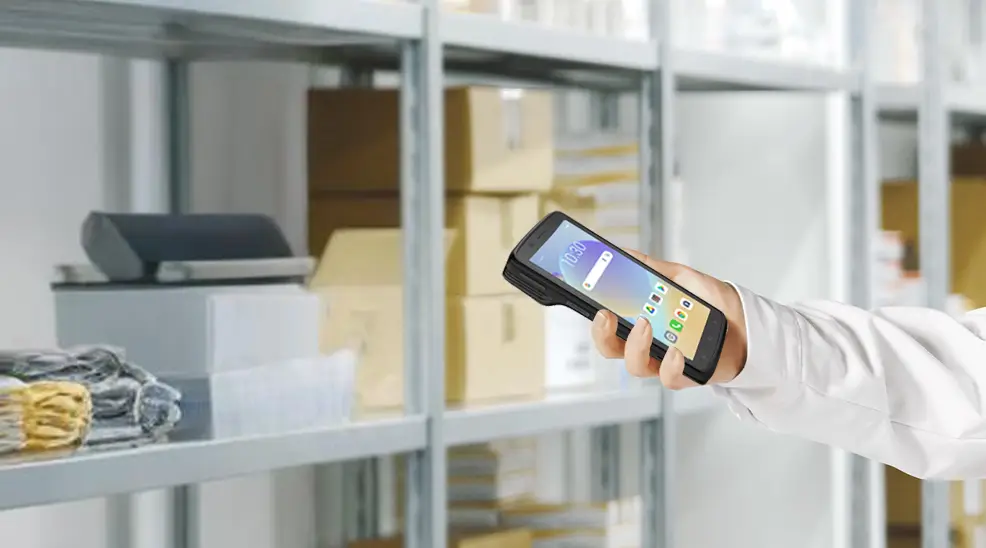
1. Why Do You Need a Professional Scanner for Tracking Equipment?
Asset tracking is not just about recording item locations; it concerns efficiency, cost control, and compliance. Imagine: if your factory production is interrupted due to lost equipment, or a hospital delays treatment because instruments cannot be found, the losses will far exceed the investment in a scanner. Professional scanners automate data collection, enabling real-time tracking, reducing human error, and improving data accuracy. For example, using an ordinary phone camera or manual entry can have an error rate as high as 10%, while a professional scanner can reduce the error rate to below 1%. This not only saves time but also directly saves money by preventing asset loss. Choosing the right asset tracking scanner is the first step to optimizing asset management.
2. Core Choice: Barcode Scanner vs. RFID Scanner
When it comes to scanners for tracking devices, the two mainstream technologies are barcode scanners and RFID scanners. Each has its own advantages and disadvantages and suits different scenarios. Let's compare them in detail:
Barcode Scanner: Based on optical technology, it identifies assets by scanning printed barcodes (such as 1D or 2D barcodes). Advantages include lower cost, mature technology, and ease of deployment. For instance, in retail environments, equipment inventory scanners are often used for quick product barcode scanning. However, the disadvantages are obvious: short reading distance (usually requiring close proximity and alignment), susceptibility to damage (e.g., smudged barcodes), and inability to read in batches, resulting in lower efficiency.
RFID Scanner: Uses radio frequency to automatically identify tags, reading data without requiring a direct line of sight. Advantages include long-distance reading (up to several meters), batch processing (reading multiple tags at once), and durability (tags can be embedded within assets). This makes RFID scanners superior in complex environments like warehouses or hospitals, where they enable high-speed inventory counting. According to industry data, RFID technology can reduce inventory time by over 80%.
Simply put, barcode scanners are suitable for scenarios with limited budgets and a small number of assets; RFID scanners are better for high-traffic environments requiring efficient tracking. The choice should be based on asset type, environmental conditions, and budget.
3. How to Choose the Best Scanner for Tracking Devices?
Choosing a scanner is not a one-size-fits-all process; it requires considering multiple factors. Here are the key points based on professional experience to help you make an informed decision:
Reading Performance: Evaluate reading distance and speed. For large warehouses, choose a UHF RFID scanner with a reading range of over 6 meters to improve efficiency; for small-scale retail, a barcode scanner might suffice.
Durability and Environmental Adaptability: The scanner needs to adapt to the on-site environment, such as dust, water splashes, or drops. Look for devices with an IP68 rating (dustproof and waterproof) and certified to withstand drops from 1.8 meters, ensuring reliable use by frontline staff.
Integration and Compatibility: The device should support existing systems (like ERP or WMS) and be easy to integrate via SDKs and management tools. For example, Android system compatibility can simplify app development.
Cost-Effectiveness: Consider the total cost of ownership, including purchase price, maintenance, and upgrade costs. RFID scanners have a higher initial investment but save labor costs in the long run; barcode scanners are more suitable for short-term needs.
User Experience: Ergonomic design (such as a non-slip grip) can reduce employee fatigue and increase productivity. Meanwhile, advanced technologies like Wi-Fi 6 ensure stable data transmission.
4. Recommended for You: AUTOID UTouch 2-S UHF RFID Handheld Reader
Among the many options, the SEUIC AUTOID UTouch 2-S UHF RFID Handheld Reader stands out as a top-tier asset tracking scanner. This device combines innovative technology with battle-tested reliability, designed for demanding environments.
Core Advantages:
Advanced UHF RFID Capability: Equipped with an Impinj module, it offers a read distance of up to 6 meters (frontal) and 3 meters (vertical), supporting batch reading at 700 times per second, significantly improving tracking efficiency. Its anti-collision algorithm ensures stable operation in dense asset environments.
Excellent Durability: Complies with IP68 standards, withstands drops from 1.8 meters onto concrete, and has passed 5000 rolling tests. Weighing only 325 grams, it is thin, light, and portable, suitable for prolonged use.
Efficient Data Transmission: Utilizes Wi-Fi 6 and self-developed "WELL Wi-Fi" technology to achieve fast, secure transmission of numbers, images, and videos, reducing network deployment costs.
User-Friendly Design: The back features a wavy groove and honeycomb texture for a non-slip grip, top NFC facilitates card/credential reading, and the 13MP + 5MP camera supports accurate barcode scanning.
This device is not only suitable for factories, logistics, and hospitals but also simplifies management through ecosystem tools (like Mobile Butler) and ensures future upgradability (supports Android 14).
The SEUIC AUTOID UTouch 2-S, as a professional scanner for tracking devices, has helped numerous enterprises optimize their operations.
5. Case Validation: Application of RFID Reader in Hospital Equipment Management
Theory needs to be combined with practice. The case of Peking University Shenzhen Hospital perfectly demonstrates the value of RFID readers in asset tracking. This tertiary public hospital faced challenges such as scattered assets, information silos, and inefficiency.
Solution:
By deploying RFID readers, the hospital achieved full lifecycle management of fixed assets, covering storage, allocation, maintenance, and disposal. Specific benefits include:
- Efficiency Improvement: RFID technology reduced asset inventory time from hours to minutes, minimizing manual errors.
- Cost Savings: By optimizing asset utilization, it reduced the risk of idleness and loss, directly saving maintenance costs.
- Data Integration: Integration with the financial system provided real-time analysis to support decision-making.
This case proves that choosing the right scanner can not only solve immediate problems but also drive long-term growth. Hospital feedback indicated a significant increase in employee satisfaction, and asset tracking became seamless and efficient.
Asset tracking is not a luxury but a necessity for modern enterprises. By choosing the right scanner for tracking devices, you can minimize time waste and monetary loss. Remember: barcode scanners are suitable for simple scenarios, while RFID scanners have the advantage in complex environments. The SEUIC AUTOID UTouch 2-S, with its durability, high performance, and validated case studies, is an ideal choice.
Founded in 2002, SEUIC Technologies Co., Ltd. has been committed to grasping core technologies, enhancing technological innovation, providing excellent self-owned brand products, including mobile computers, RFID readers, tablets, barcode scanners and fixed readers. With highly reliable products and efficient services, our products have been widely used in manufacturing, retail, logistics & transportation, healthcare and other industries. We provide frontline workers more durable real-time data collection tools, helping you do more thereby to catapult your productivity to the next level.
- Demystifying Manual Traceability Pains: How CRUISE2 5G Enables Barcode-Based Bidirectional Traceability2026-04-03
- Demystifying Slow Backroom Transfers: How UTouch 2-S Enables Second-Level Inventory Navigation2026-04-03
- Demystifying Quality Control Bottlenecks: How RFID Moves Towards Proactive Prevention2026-04-02
- How Handheld Computers Achieve End-to-End Traceability2026-04-02
- Demystifying Workstation Information Bottlenecks: How CRUISE2 5G Enables Paperless, Real-Time Operations2026-04-01