Brief Introduction
Imagine this: on a high-speed modern production line, circuit boards and precision metal components are being assembled one after another. To ensure precise production traceability and quality control, each component has a DPM code containing key information directly marked on its surface via laser, etching, or dot peen. However, when operators or automated workstations attempt to scan these "identity tags," the scanners frequently report errors, respond sluggishly, or even fail to read entirely.
The data collection process is interrupted, leaving subsequent ERP and MES systems with "nothing to cook." This is not just an efficiency issue; it can lead to batch confusion, failed quality traceability, and even trigger serious delivery and compliance risks. The root of the problem often lies in the "first mile" of data collection—is the barcode scanner equipped for the production line truly capable of this "professional" job?
Today, we will delve into how industrial barcode scanners become the key to solving DPM code scanning challenges and reveal the core value of professional equipment in ensuring smooth production line data collection.
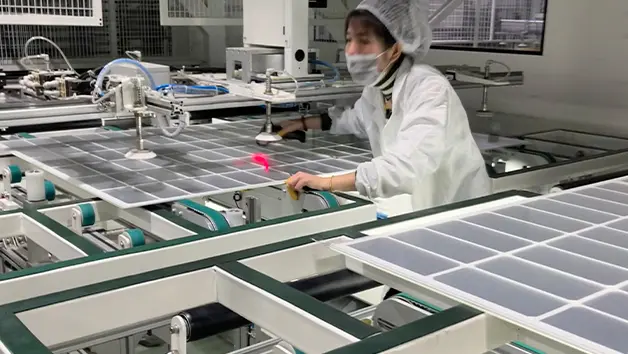
1. Special Challenges of Production Line Scanning—Why General-Purpose Scanners Fall Short?
General-purpose scanners that perform well in offices or on retail shelves can instantly "fail" once they enter the production workshop. This is not a device malfunction but a selection error. The production line imposes extremely stringent requirements on data collection equipment:
Harsh Physical Environment: Oil, dust, vibration, high or low temperatures are the norm. The optical components and structural design of ordinary scanners cannot operate stably in such environments long-term.
Complex Barcode Carriers and Backgrounds: DPM codes may be directly marked on reflective or low-contrast materials like metal, plastic, and ceramics. Additionally, background textures, product curvature, and color variations can create significant interference for recognition.
Demands for Speed and Accuracy: Production lines pursue a "first-pass yield." Scanning must be fast (millisecond-level), accurate (close to 100%), and able to adapt to partial loss or quality degradation of barcodes due to wear and contamination.
Diverse Code Types and Forms: In addition to traditional 1D barcodes, production lines increasingly use high-information-density 2D codes (like Data Matrix, QR Code). These codes can be extremely small or have varying print/marking quality.
General-purpose scanners lack the specialized algorithms, rugged construction, and optical design to cope with the above challenges, so it is inevitable that they are "overwhelmed" on the production line.
2. Four Key Application Scenarios for Barcode Scanners on Production Lines
Understanding the challenges, let's look at the specific areas where a professional industrial barcode scanner plays an irreplaceable role:
Incoming Inspection and Warehousing: Quickly scan labels or DPM codes on components supplied by vendors, automatically verifying them against purchase orders to ensure material accuracy.
Work-in-Progress (WIP) Tracking: At each key workstation (e.g., welding, assembly, testing), scan the serial or batch number on the product to record production time, operator, equipment parameters, and test results. This is the cornerstone of production traceability.
Quality Inspection and Control (QC): At quality inspection stations, scan product barcodes to link to corresponding quality standard documents and inspection history. For non-conforming products, scanning automatically triggers the quarantine process and records the cause.
Finished Goods Outbound and Logistics: At packaging lines and shipping areas, scan barcodes on finished product cartons to automatically generate shipping documents and link with the ERP system for precise inventory deduction and real-time logistics information updates.
3. The Professional Choice—How the SEUIC HS305DP Industrial Scanner Solves the Challenges
Faced with the challenges of DPM code recognition, how does a professional device like the SEUIC HS305DP industrial barcode scanner address them through targeted design in hardware, software, and algorithms? Let's analyze it as an example:
3.1 Imaging Engine and Lighting System Optimized for DPM
- The HS305DP uses a high-performance global shutter CMOS sensor and high-quality optical lenses, capable of capturing extremely fine dot-matrix information of DPM codes, even on low-contrast or highly reflective metal surfaces.
- It is equipped with multi-angle, programmable red/white illumination lights. For DPM codes made with different materials and processes (like laser etching, dot peen marking), it can flexibly adjust the lighting angle and intensity to "highlight" the barcode and suppress background interference, significantly improving the first-read rate.
3.2 Powerful Decoding Core and Algorithms
- It features a built-in high-performance decoding chip, supporting the full range of 1D/2D barcodes, with deep optimization for complex symbologies like Data Matrix, QR codes, and GS1 DataBar.
- It incorporates advanced image processing and symbology recognition algorithms, intelligently compensating for barcode image quality degradation caused by wear, contamination, deformation, or uneven lighting, achieving "fuzzy decoding."
3.3 Rugged and Durable Industrial-Grade Design
- The housing design meets a high IP54 protection rating, effectively preventing dust ingress and water jet splashes, and is impervious to common oil stains and washdowns on production lines.
- It has passed rigorous 1.8-meter drop tests, possessing excellent impact and shock resistance, ensuring long-term reliable operation in harsh environments.
3.4 Seamless Production Line Integration Capability
- It offers a rich selection of interface options (such as USB, RS232, keyboard wedge, and supports Ethernet or Bluetooth) and programmable functions, allowing easy integration into existing PLCs, industrial computers, or mobile data terminals.
- Its excellent scanning performance and compatibility make it an ideal front-end device for realizing automated production line data collection.
4. Success Case Study: The Practice of Foxconn, a Global Electronics Manufacturing Giant
Theory requires practical validation. Foxconn, a world-leading electronics manufacturing service provider, has extreme requirements for the accuracy, speed, and stability of data collection on its production lines. Faced with the challenge of rapidly recognizing tiny, reflective DPM codes on components like PCBs and precision metal casings, general-purpose equipment could not meet its stringent demands for production traceability and quality control.
By deploying the SEUIC HS305DP industrial barcode scanner, Foxconn's production lines successfully achieved:
- Near 100% DPM Code Recognition Rate: Even on high-speed moving production lines, it stably and quickly reads DPM codes on various complex backgrounds and materials, fundamentally eliminating production interruptions and data gaps caused by scanning failures.
- Significant Improvement in Data Collection Efficiency: Millisecond-level scanning response speed matched its efficient production cycle, ensuring production data (such as SN serial numbers, test results, workstation information) was captured and uploaded to the MES system in real-time and accurately.
- Enhanced End-to-End Traceability Capability: From SMT placement to final assembly and testing, the identity information of every key component and finished product was completely recorded. This provided a solid data foundation for quality analysis, root cause investigation of issues, and meeting customer compliance audit requirements.
- Reduced Total Cost of Ownership (TCO): The durability of the industrial-grade equipment significantly reduced downtime and replacement costs caused by device failures. Its long-term stable performance provided assurance for the continuous operation of the production lines.
This case fully validates the excellent performance of industrial barcode scanners in recognizing DPM (Direct Part Marking) codes, providing a reliable practical example for you to achieve product digital collection.
In today's manufacturing industry advancing towards intelligence and digitalization, reliable data is the lifeblood driving all decisions and optimization. The source of production line data collection—the barcode scanning link—should never be the weakest link in the entire digital value chain. Choosing a professional industrial barcode scanner like the HS305DP is not just purchasing a hardware tool; it is introducing an indefatigable, precise, and reliable "data sentinel" to your production line. It can effectively solve DPM code scanning challenges, ensure the integrity and credibility of the production traceability system, and ultimately lay a solid data foundation for improving production efficiency, ensuring product quality, and meeting compliance requirements.
- Demystifying Manual Traceability Pains: How CRUISE2 5G Enables Barcode-Based Bidirectional Traceability2026-04-03
- Demystifying Slow Backroom Transfers: How UTouch 2-S Enables Second-Level Inventory Navigation2026-04-03
- Demystifying Quality Control Bottlenecks: How RFID Moves Towards Proactive Prevention2026-04-02
- How Handheld Computers Achieve End-to-End Traceability2026-04-02
- Demystifying Workstation Information Bottlenecks: How CRUISE2 5G Enables Paperless, Real-Time Operations2026-04-01