Brief Introduction
At the end of each month, does your factory or warehouse need to suspend operations for two days and mobilize all staff for a "carpet-style" inventory count? Even so, does the final inventory accuracy rate still hover around 3%-5%, leading to delayed replenishment, incorrect order shipments, or unclear capital allocation? For retail store managers, are sales opportunities lost due to the inability to track the real-time location of each item? For hospital pharmacies, are there safety hazards associated with manually recording drug batches and expiration dates?
Traditional barcode and manual inventory methods are showing their limitations in today's pursuit of ultimate efficiency and accuracy. They are highly labor-dependent, slow, error-prone, and cannot provide real-time inventory visibility. In contrast, RFID inventory management systems based on UHF (Ultra-High Frequency) Radio Frequency Identification technology are bringing a revolutionary change. They enable second-level bulk counting, 99.9% read accuracy, and can reduce related labor costs by over 70%, transforming inventory management from "post-event statistics" to "real-time perception and intelligent decision-making."
This article provides a comprehensive analysis of UHF RFID inventory systems, covering their technical advantages, core principles, key selection factors, and uses the SEUIC AUTOID UTouch 2-S UHF RFID Handheld Reader as an example to demonstrate how to translate cutting-edge technology into practical productivity.
1. Why Choose RFID? In-Depth Comparison of Technical Advantages
Before selecting an inventory tracking technology, it is crucial to clearly understand the differences between solutions. We compare three mainstream technologies: traditional barcode/QR code, HF RFID (High Frequency), and UHF RFID (Ultra-High Frequency).
| Feature | Barcode/QR Code | HF RFID (e.g., 13.56MHz) | UHF RFID (e.g., 860-960MHz) |
| Reading Method | Visual, contact-based, requires alignment and clear line-of-sight | Near-field inductive, short range (<10cm) | Contactless, long range (meters to tens of meters) |
| Bulk Reading | Not supported, must scan items one-by-one | Limited support (average anti-collision capability) | Excellent support, can instantly read hundreds of tags |
| Penetration | None, fails if barcode is dirty/damaged | Weak, susceptible to metal/liquid interference | Stronger, can read through non-metallic materials |
| Data Capacity | Limited (tens to hundreds of bytes) | Relatively large (up to several KB) | Large (typically 512 bits to several KB) |
| Read/Write Capability | Read-only (immutable after printing) | Read and Write | Read and Write, information can be updated dynamically |
| Speed & Efficiency | Slow, relies on manual operation | Relatively slow, suitable for single-item interaction | Extremely fast, ideal for rapid bulk asset counting |
2. How Does a UHF RFID Inventory System Work? Technical Principle Analysis
A complete UHF RFID inventory system mainly consists of three parts:
2.1 RFID Electronic Tag (Tag)
This is the "digital ID card" attached to each item, pallet, or shelf. The UHF tag contains a chip and an antenna. The chip stores a unique EPC code and other information (e.g., production date, batch number). Tags are categorized as passive (relying on reader power), active (with internal battery), or semi-passive. Inventory management primarily uses low-cost, high-volume passive UHF tags.
2.2 RFID Reader and Antenna
The RFID reader is the "brain" and "communication hub" of the system. It emits radio waves through its antenna to power up and awaken the tags, then receives the data reflected back by the tags. In a warehouse, readers can be deployed as:
Fixed Type: Such as the SEUIC AUTOID UF40, installed at warehouse doors, on conveyor belts, or forklifts for automatic identification of incoming/outgoing goods.
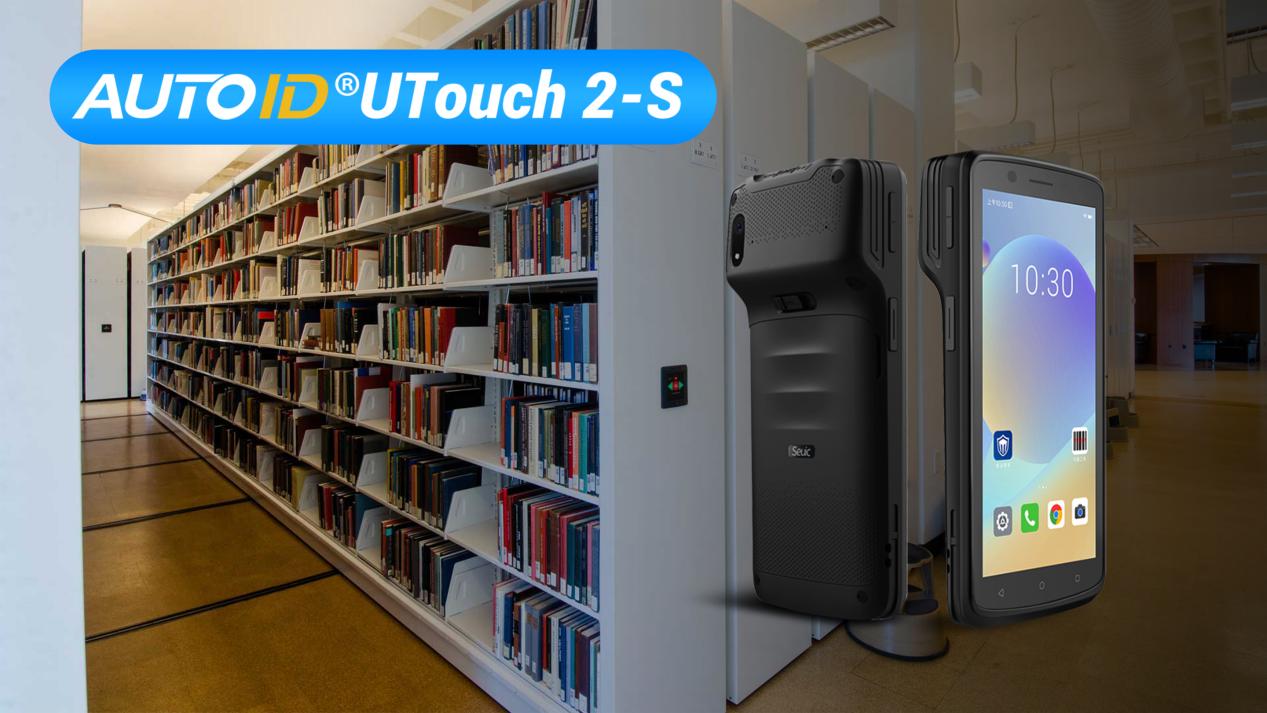
Handheld Type: Such as the SEUIC AUTOID UTouch 2-S, used for mobile counting, location finding, and inspection.
2.3 Inventory Management Software
This is the "command center" of the system. It receives data from the readers, integrates with the enterprise's ERP, WMS (Warehouse Management System), updates inventory quantities, locations, and status in real-time, generates inventory reports, provides alerts (e.g., for low stock, misplaced items), and offers a visual inventory dashboard.
Workflow Summary: When goods with RFID tags enter the coverage area of a reader's antenna, the reader automatically and bulk-reads all tag information and uploads it to the backend system in real-time. Administrators can instantly know "what, where, and how many" on their computers or handheld devices.
3. How to Choose the Right UHF RFID Inventory System for You? Key Selection Guide
Faced with numerous products, how to make a wise decision? Focus on the following core dimensions:
3.1 Reading Performance & Distance Requirements
Dense Shelving Environments: Require readers with strong anti-collision capability and high read rates.
Large Items/Outdoor Scenarios: Require longer read distances (e.g., over 10 meters).
Metal or Liquid Environments: Require specialized anti-metal tags or readers/tags optimized for liquid environments.
3.2 Deployment Method: Mobile vs. Fixed
Mobile Counting/Inspection: Must choose lightweight, long-lasting, rugged, and durable UHF RFID handheld terminals.
Gateway/Conveyor Automatic Capture: Choose fixed readers and directional antennas.
3.3 Device Ruggedness & Industrial Design
Warehouse and factory environments are complex; equipment needs drop resistance, dust resistance, water resistance (at least IP65 rating), and the ability to adapt to temperature and humidity changes.
3.4 Data Processing & Integration Capability
The reader should be able to handle massive tag data and upload it quickly. Its software SDK should be open and easy to use, facilitating seamless integration with your existing WMS/ERP system, which is key to maximizing the system's value.
3.5 Total Cost of Ownership (TCO)
Consider not only the equipment purchase cost but also evaluate tag costs, deployment complexity, training costs, and long-term maintenance costs. Choosing a brand with a mature ecosystem and reliable technical support is crucial.
4. Practical Tool: In-Depth Analysis of SEUIC AUTOID UTouch 2-S UHF RFID Handheld Reader
Based on the above selection criteria, let's use the SEUIC AUTOID UTouch 2-S as an example to see how an excellent industrial-grade UHF RFID handheld terminal meets stringent inventory management requirements.
4.1 Excellent Industrial Design and Reliability
Lightweight yet Rugged: Designed for prolonged mobile operation, ergonomic, with excellent drop, dust, and water resistance, easily handling harsh environments like warehouses and outdoors.
Professional RFID Module: Integrates a high-performance UHF RFID read/write module, offering long tag read distance, fast speed, and accurate counting, efficiently identifying even densely stacked items.
4.2 Powerful Smart Terminal Platform
Open Android System: Provides high flexibility, allowing installation of various inventory management apps and seamless connection to enterprise backend systems.
Multifunctional All-in-One: Besides RFID, typically equipped with a high-performance barcode scanner, camera, GPS, etc., meeting composite needs like asset identification, data capture, and photo evidence, serving multiple purposes with one device.
4.3 Long Battery Life and High Efficiency
Large Capacity Battery: Ensures continuous operation for a full shift or longer, supports fast charging or hot-swappable battery replacement, achieving "continuous operation".
Powerful Processing Capability: Ensures smooth system operation without lag and rapid data processing/uploading when reading hundreds of RFID tags in bulk.
4.4 Easy Development and Deployment
SEUIC provides a complete Software Development Kit (SDK) and technical support, helping enterprises or integrators quickly integrate RFID functionality into existing counting or inspection processes, accelerating digital transformation.
Typical Application Scenarios:
Warehouse Cycle Counting: Employees walk past shelves with the UTouch 2-S, completing counts of entire rows of goods in seconds, with data automatically syncing to the WMS.
Retail Store Inventory Management: Quickly locate specific SKUs or efficiently perform store-wide counts after hours.
Logistics Sorting & Verification: Bulk read parcel or pallet tags to ensure 100% outbound shipping accuracy.
Fixed Asset Inspection: Periodically inspect equipment assets, updating status and location information.
A UHF RFID inventory system is far more than a simple technology upgrade; it is a profound reshaping of operational management models. The real-time visibility, extreme accuracy, and operational efficiency it brings directly translate into lower operating costs, higher customer satisfaction, and more agile decision-making.
Whether you are a manager overseeing a thousands-of-square-meter warehouse, a store manager responsible for ensuring well-stocked chain stores, or a supervisor optimizing logistics center processes, investing in a mature RFID inventory tracking solution is a key step towards refined and intelligent management.
- Demystifying Manual Traceability Pains: How CRUISE2 5G Enables Barcode-Based Bidirectional Traceability2026-04-03
- Demystifying Slow Backroom Transfers: How UTouch 2-S Enables Second-Level Inventory Navigation2026-04-03
- Demystifying Quality Control Bottlenecks: How RFID Moves Towards Proactive Prevention2026-04-02
- How Handheld Computers Achieve End-to-End Traceability2026-04-02
- Demystifying Workstation Information Bottlenecks: How CRUISE2 5G Enables Paperless, Real-Time Operations2026-04-01