Brief Introduction
Imagine this scenario: In a modern warehousing park covering tens of thousands of square meters, hundreds of forklifts shuttle back and forth, and thousands of palletized goods circulate in automated storage systems. As a warehouse manager, you are troubled by several questions every day: Where exactly is that batch of finished products that urgently needs to be shipped out? Is forklift driver No. 3 currently in the receiving area or the shipping area? Will the monthly asset inventory once again require a massive effort and a two-day shutdown?
Traditional barcode scanning requires "line-of-sight and alignment," which is almost ineffective in large, dynamic, and complex scenarios. The inefficiency, errors, high cost of manual inventory counting, and the lack of real-time location information are severely restricting operational efficiency and decision-making speed. Today, we will delve into the key technology that solves this series of pain points - the long-range RFID reader. How does it achieve "non-line-of-sight," "batch," "in-motion" automatic identification, opening a new chapter of transparent and intelligent management for you?
1. What is a Long-Range RFID Reader? Clarifying Concepts and Misconceptions
First, we must clarify a key concept: "Long-range" is relative and highly dependent on the technology type. Typically, in the RFID field, systems with a read range of several meters to over a hundred meters are referred to as long-range RFID systems.
Its core principle is that the reader emits a radio frequency signal through an antenna, activating electronic tags (RFID Tags) within a certain range. The tags respond by reflecting or transmitting a signal, thereby wirelessly reading or writing data. The key to achieving "long range" lies in the reader's transmission power, antenna gain, operating frequency band, and most importantly, the type of tag used.
Common Misconception: Believing that a single reader can unconditionally read any tag hundreds of meters away.
Fact: Read range is the result of the combined effect of the reader, antenna, tag, and environment. The answer to "how far can a long range RFID reader read?" varies, from 3-10 meters (high-performance passive UHF) to over 100 meters (active tags).
2. Technical Core: Passive vs. Active RFID - The Essential Difference Behind Range
Understanding the difference between passive and active RFID range is the foundation for selection. These are two fundamentally different technological paths.
2.1 Passive RFID
Working Principle: The tag itself has no power source and relies on the electromagnetic waves emitted by the reader's antenna to harvest energy, momentarily activating it to send back data.
Typical Frequency Band and Range: The long-range passive RFID we discuss mainly refers to the UHF (Ultra-High Frequency, 860-960MHz) band. Under ideal conditions, a fixed reader can achieve a read range of 10-15 meters for standard tags. The range can be longer by increasing reader power, using high-gain antennas, or specialized tags.
Characteristics: Very low tag cost (as low as a few cents), small size, unlimited lifespan (no battery required). An ideal choice for large-scale item-level applications, such as every box of goods in a warehouse or every garment in a retail store.
Representative Products: Fixed UHF RFID Readers, High-Performance UHF RFID Handheld Terminals.
2.2 Active RFID
Working Principle: The tag has a built-in battery and actively transmits signals periodically or when triggered by an event.
Typical Frequency Band and Range: Commonly uses bands like 2.4GHz or 433MHz. Due to active transmission, the read range is very long, typically reaching 70-150 meters or even farther.
Characteristics: High tag cost (tens to hundreds of RMB), relatively large size, limited battery life (typically 2-5 years). But it enables true long-range, real-time positioning (often combined with technologies like ZigBee or UWB for zone positioning).
Core Applications: Tracking high-value assets or vehicles, such as forklifts and trailers within a plant, valuable medical equipment in hospitals, or large tools on construction sites. This is also one of the primary technical solutions considered when looking for the best long range RFID reader for vehicle tracking.
3. Core Application Scenarios: Where Does the Long-Range RFID Reader Create Value?
Scenario 1: Smart Warehousing and Logistics (RFID Reader for Warehouse)
Pallet/Tote-Level Management: Deploy fixed long-range RFID readers at warehouse doors and aisle intersections. When pallets/totes equipped with UHF RFID tags pass by, they are automatically and batch-recorded for inbound/outbound and movement information, achieving inventory visibility.
Forklift Smart Management: Install active RFID tags on each forklift, deploy readers in key areas to monitor their location and operational status in real-time, optimize scheduling, and prevent unauthorized entry into specific areas.
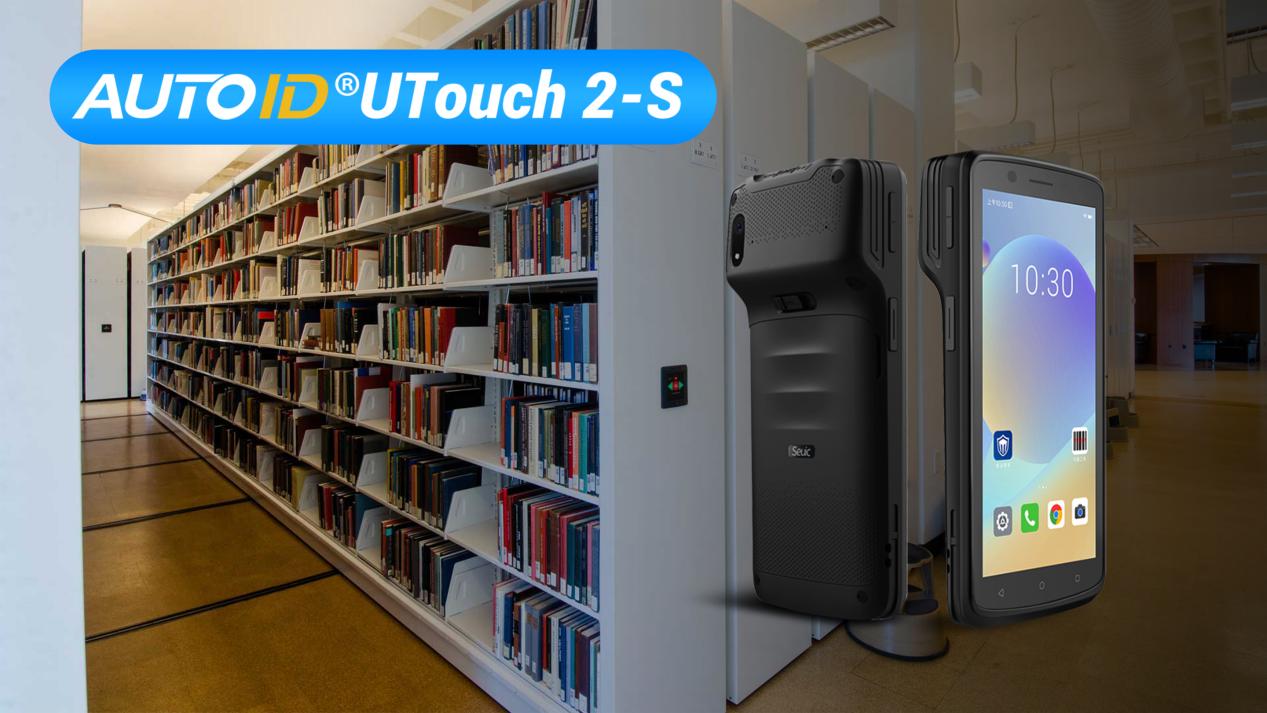
Rapid Inventory Counting: Operators use high-performance UHF RFID handheld terminals (e.g., SEUIC's AUTOID UTouch 2-S) to instantly read hundreds of item tags within a range of several meters just by walking past shelves, increasing inventory counting efficiency by tens of times.
Scenario 2: Retail and Store Management
Smart Fitting Rooms and Inventory: Deploying readers within the store allows tracking of garment locations (whether on shelves, in fitting rooms, or in the stockroom) and enables store-wide inventory counting in seconds.
Supply Chain Visibility: The flow of full-case goods from distribution centers to stores can be automatically verified using UHF RFID, reducing errors.
Scenario 3: Asset Tracking and Personnel Management (Covering Healthcare, Utilities, Government)
Hospital Asset/Medical Record Management: Tag mobile medical equipment and medication carts for quick location, improving utilization efficiency.
Utility Inspection (Gas, Water, Electricity): Install metal-mount RFID tags on outdoor meters and pipeline equipment. Inspectors use handheld readers for long-distance reading, replacing manual recording, improving data accuracy and work efficiency.
Site Personnel/Vehicle Access Management: Deploy readers at facility gates to enable automatic identification and non-stop access for vehicles (especially internal vehicles).
4. How to Select? Key Consideration Factors Checklist
Faced with a wide array of products, how do you choose the right long range RFID reader for you? Please evaluate the following points:
4.1 Identification Target and Range Requirements
Is the goal to identify "items" (e.g., boxes) or "assets/vehicles"? This determines whether to prefer passive UHF or active RFID.
What range is needed? Is it for static reading or dynamic (high-speed passage) reading?
4.2 Reader Form Factor Selection
Fixed Readers: For gateways, key points, 24/7 continuous operation. Consider power supply, networking (PoE preferred), and antenna layout for fixed long range RFID reader installation.
Handheld Readers: For mobile inventory counting and inspection. Consider battery life, weight, protection rating (IP rating), and read performance (e.g., the excellent performance of SEUIC's AUTOID UTouch 2-S).
4.3 Performance Indicators
Multi-tag Read Rate: How many tags can be read stably per second? Crucial for high-throughput scenarios.
Anti-interference Capability: How does it perform in environments dense with metal or liquids?
Protocol Compatibility: Does it support mainstream standards (e.g., EPCglobal Gen2)?
4.4 Environment and Integration
Industrial environments require high protection ratings (e.g., IP67).
Is it easy to integrate with existing WMS, ERP, or MES systems via APIs?
5. Deployment and Tuning Guide: Maximizing System Effectiveness
A successful RFID project relies 30% on hardware and 70% on deployment.
Site Survey and Planning: Define the installation location, angle, and height of readers and antennas. Avoid metal obstacles and sources of electromagnetic interference.
Tag Selection and Placement Testing: Select specialized tags based on the tagged object's material (metal, liquid, plastic), and conduct on-site read tests to determine the optimal placement and orientation.
Antenna Selection and Polarization: Linear polarization antennas have strong directivity and longer range; circular polarization antennas have better orientation tolerance but slightly shorter range. Choose based on the scenario.
Power and Sensitivity Tuning: Set the reader's transmission power appropriately to meet the read range requirements while avoiding interference caused by overlapping read zones, and ensure compliance with local radio regulations.
Pilot and Rollout: First, complete end-to-end process verification in a small area. Resolve all issues before full-scale promotion.
6. Equipment Recommendation: A Powerful Tool for Flexible Mobile Identification - SEUIC AUTOID UTouch 2-S UHF RFID Handheld Reader
In scenarios requiring high flexibility and mobility for inventory counting, inspection, and searching, a powerful handheld RFID reader is indispensable. Our recommended AUTOID UTouch 2-S is born for long-range RFID identification in harsh industrial environments.
Excellent Read Performance: With its high-performance RFID module, it achieves a stable read range of up to 15 meters, easily handling tasks like shelf inventory and warehouse searching, perfectly addressing user concerns about UHF RFID reader long-range performance.
Efficient Batch Reading: In dense tag environments, it enables fast and accurate batch reading, significantly improving inventory efficiency, making it an ideal choice for mobile applications as an RFID reader for warehouse.
Rugged and Durable Design: Rated IP65, it is protected against dust and water jets, and can withstand multiple 1.5-meter drops onto concrete, making it fully adaptable to complex environments like warehouses and workshops.
Long Battery Life and Ergonomic Design: A large-capacity battery supports long operation times, combined with a comfortable industrial design to reduce operator fatigue.
Whether used as a supplement to a fixed reader network or to independently perform mobile inventory tasks, the AUTOID UTouch 2-S demonstrates excellent professionalism and reliability.
Long-range RFID readers are far from simple "barcode scanner replacements"; they are a key perception layer for digitizing the physical world. By deeply understanding the differences between passive and active technologies, accurately matching application scenarios, and following scientific selection and deployment processes, enterprises can build a real-time, automatic, and accurate asset and logistics visualization system.
From reducing inventory time and preventing asset loss to optimizing logistics paths and improving operational efficiency, the return on investment is clear. Technology is eliminating the "blind spots" in management, and choosing the right tool is the first step towards your intelligent upgrade.
- Demystifying Manual Traceability Pains: How CRUISE2 5G Enables Barcode-Based Bidirectional Traceability2026-04-03
- Demystifying Slow Backroom Transfers: How UTouch 2-S Enables Second-Level Inventory Navigation2026-04-03
- Demystifying Quality Control Bottlenecks: How RFID Moves Towards Proactive Prevention2026-04-02
- How Handheld Computers Achieve End-to-End Traceability2026-04-02
- Demystifying Workstation Information Bottlenecks: How CRUISE2 5G Enables Paperless, Real-Time Operations2026-04-01