Brief Introduction
In today's fast-paced operational environments - from busy warehouse floors and retail store backrooms to remote field inspection points and hospital wards - reliable, real-time data access is crucial. You might be managing inventory, checking goods, recording patient vital signs, or reading utility meter data. The tools enabling these critical tasks are typically not consumer-grade smartphones or tablets, but purpose-built handheld computers.
However, questions remain. What exactly is the precise definition of a handheld computer? How does it differ from the smartphone in your pocket? When terms like "Industrial PDA," "rugged tablet," and "data collector" are used, how do you choose the right device for your team's mission-critical work?
This authoritative guide will clear the fog. We will start with a clear definition of a handheld computer, delve into its core architecture, trace its development, and provide a practical framework for understanding its various types. Most importantly, we will conduct an in-depth analysis of practical application scenarios across industries and provide specific selection guidelines to help you make informed decisions.
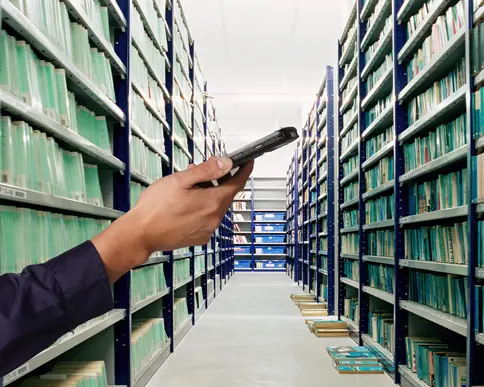
1. Handheld Computer Definition: Core Concept
In its most basic form, a handheld computer is a compact, portable computing device designed for data capture, processing, and communication, typically operated while held in the hand. Unlike general-purpose consumer electronics, modern handheld computers are often designed for specific enterprise, industrial, or governmental tasks.
Authoritative sources like Wikipedia define it as: "a handheld computer... is a computer small enough to be held in one's hand." While the size description is accurate, the definition of today's industrial handheld computers has expanded to emphasize durability, specialized data capture capabilities (such as barcode scanning or RFID reading), and seamless integration with backend business systems.
2. Core Characteristics: What Constitutes a Handheld Computer?
Beyond portability, the following key characteristics define a true industrial handheld computer:
Rugged and Durable Design: Built to withstand harsh conditions - drops onto concrete floors (often compliant with MIL-STD-810H), dust ingress (IP65/IP67 ratings), water jets, and extreme temperatures.
Integrated Data Capture: Incorporates specialized scanning engines (1D/2D barcode, long-range) or RFID readers as a core function, not as an afterthought or accessory.
Enterprise-Grade Connectivity: Reliable and diverse connection options, including Wi-Fi 6, Bluetooth 5.x, and crucially, global 4G/5G cellular connectivity, enabling true anytime, anywhere operations.
Long-Lasting Battery Life: Supports hot-swappable batteries or large-capacity designs that enable continuous operation for full shifts (or multiple shifts).
Ergonomic and Task-Optimized Form Factor: Designed for prolonged use, often featuring pistol grips, programmable keys, and scan triggers for efficiency.
Manageable Software and Security: Runs on manageable operating systems (Android, Windows IoT) with robust security features (SELinux, Knox, remote device management) to protect sensitive business data.
3. Brief History: From PDA to Powerful Industrial Tool
This journey began in the early 1990s with Personal Digital Assistants (PDAs) like the Palm Pilot, which introduced basic information management in a handheld form. The early 2000s saw the emergence of rugged PDAs with integrated barcode scanners for logistics and retail. Later, the convergence of mobile phone technology blurred the lines, but the need for specialized, durable devices only grew. Today's handheld computers are powerful, connectivity-rich devices running advanced Android systems, representing the mature integration of computing, communication, and data capture.
4. In-Depth Technical Architecture Analysis
Modern handheld computers are complex systems:
Processor and Memory: Balanced multi-core CPUs (e.g., octa-core) with ample RAM (4GB+) ensure smooth operation of business applications without lag.
Display: High-brightness, sunlight-readable touchscreens, often supporting gloved and wet-hand touch, and protected by Gorilla Glass.
Data Capture Engine: The heart of the device. Includes high-performance imagers or lasers for scanning, and advanced decoding software for damaged or poor-quality barcodes.
Operating System: Android now dominates due to its flexibility, familiar development environment, and rich app ecosystem. Some specialized devices may use Windows IoT.
Durability Engineering: This involves internal shock-absorbing brackets, sealed ports, and reinforced housing materials to achieve industry-standard ruggedness ratings.
5. Handheld Computer vs. Smartphone: Key Differences
This is a key point of confusion. While both are handheld smart devices, their design philosophies are fundamentally different.
| Dimensio | Industrial Handheld Computer | Consumer Smartphone |
| Design Philosophy | Tool-first approach, designed for reliably and efficiently completing specific tasks. | Consumer experience-first, designed for entertainment, socializing, and general computing. |
| Durability | Actively Rugged. Designed from the outset to withstand harsh environments, with a long lifecycle (typically 3-5+ years). | Passively Protected. Relies on cases; the device itself is fragile with a high accidental damage rate. |
| Data Capture | Professional, Efficient, Reliable. Optimized for high-frequency, high-intensity scanning with high success rates and speed. | Amateur, Supplementary, Unreliable. Relies on camera and apps, performing poorly in low-light, long-range, or fast-moving scenarios. |
| Battery & Endurance | Business Continuity Guaranteed. High-capacity batteries support full or multiple shifts; hot-swappable batteries enable “uninterrupted” operation. | Personal Use Oriented. Non-removable battery, heavy use may not last a full workday, inconvenient to use while charging. |
| Total Cost of Ownership | High initial investment, high long-term value. Reduces downtime, improves employee efficiency, and lowers hidden costs from data errors. | Low initial cost, potentially high overall cost. Includes repair, replacement, productivity loss, and business disruption costs. |
| Enterprise Control | Deep Management. Supports complete device management, application deployment, security policies, and remote control. | Limited Management. Management authority and depth are constrained by consumer OS design. |
6. Classification System: Types of Handheld Computers
Understanding the device landscape aids selection. Here are the main types of handheld computers:
6.1 By Ruggedness Level:
Fully Rugged: Highest durability (MIL-STD, IP67). Suitable for extreme outdoor/industrial environments.
Semi-Rugged: Good drop and dust protection (IP54-IP65). Suitable for retail, light warehousing.
Consumer-grade with Protective Case: Not truly rugged; relies on accessory protection.
6.2 By Form Factor & Primary Use
Pistol-Grip Handheld Terminal: Ideal for high-density scanning in warehouses and logistics.
Rugged Smartphone: Phone-shaped with integrated scanner. Ideal for field service and delivery.
Rugged Tablet: Larger screen (5-10 inches), suitable for complex forms, drawings, or vehicle-mounted applications.
7. In-Depth Application Scenario Analysis
Logistics & Warehousing: Real-time inventory management, receiving, picking, packing, and shipping. Handheld terminals with long-range scanning significantly improve efficiency and accuracy.
Retail: Store operations, inventory counting, price audits, and mobile Point of Sale (mPOS). Devices enable staff to assist customers anywhere on the sales floor.
Healthcare: Hospital staff use them for patient identification, medication administration (eMAR), specimen collection, and asset tracking, enhancing patient safety.
Field Service & Utilities: Meter readers and inspectors use rugged handhelds with GPS to collect data offline or online, generate work orders, and obtain e-signatures.
Manufacturing: Quality control personnel perform line-side inspections and Work-in-Progress (WIP) tracking. Production supervisors monitor real-time data dashboards.
8. Practical Selection Guide: How to Choose
Consider the following questions:
Usage Environment: Indoor/outdoor? Exposed to dust, moisture, extreme temperatures, or drop risks?
Primary Task: Is high-speed barcode scanning the main job, or is form entry on a large screen key?
Connectivity Needs: Is consistent Wi-Fi available, or is cellular (4G/5G) connectivity essential for real-time updates in the field?
Shift Length: Does the battery need to last 8, 12, or 24 hours? Is hot-swapping important?
Software & Integration: What backend systems (ERP, WMS) need connection? Does your IT team prefer managing Android devices?
9. Product Focus: SEUIC Cruise2 5G as an Example
When evaluating devices that embody the definition of a modern industrial handheld computer, the SEUIC Cruise2 5G is a benchmark product worth considering. Let's analyze it against the selection criteria:
Ruggedness: Complies with MIL-STD-810H and IP67 ratings, meaning it can withstand drops from 1.5 meters onto reinforced concrete and is fully dustproof and waterproof - ideal for challenging environments.
Data Capture: Equipped with a high-performance 2D imager, capable of reading damaged, distorted, or low-contrast barcodes from close range to long distance, crucial for warehouse and retail efficiency.
Connectivity: As its name suggests, 5G connectivity is a standout feature. This ensures ultra-fast, low-latency data transfer, suitable for real-time inventory updates, large file uploads (e.g., photos for proof of delivery), and smooth communication in congested network areas.
Ergonomics & Battery: Its ergonomic design includes a dedicated scan trigger, built for all-day use. The large-capacity battery supports long operation times, a key requirement for shift work.
Processing Power & OS: Driven by a powerful octa-core processor and running on the latest Android platform, it ensures smooth performance for business applications and future-proofs your investment.
Ultimately, understanding the meaning of a handheld computer lies in recognizing it as a strategic productivity engine. It is a meticulously designed tool meant to transform physical actions and data in the field into actionable digital intelligence for the enterprise. Whether it's accelerating warehouse throughput, ensuring medication accuracy in hospitals, or enabling real-time utility meter reading, choosing the right handheld computer directly impacts operational efficiency, accuracy, and ultimately, business outcomes.
By focusing on core characteristics, your specific application needs, and the advanced capabilities of modern devices (like those integrating 5G connectivity), you can move beyond the basic definition to make choices that empower your employees and transform how you operate.
- Demystifying Manual Traceability Pains: How CRUISE2 5G Enables Barcode-Based Bidirectional Traceability2026-04-03
- Demystifying Slow Backroom Transfers: How UTouch 2-S Enables Second-Level Inventory Navigation2026-04-03
- Demystifying Quality Control Bottlenecks: How RFID Moves Towards Proactive Prevention2026-04-02
- How Handheld Computers Achieve End-to-End Traceability2026-04-02
- Demystifying Workstation Information Bottlenecks: How CRUISE2 5G Enables Paperless, Real-Time Operations2026-04-01