Brief Introduction
Currently, digital transformation is deeply penetrating the industrial sector, with the pace of technological iteration continuously accelerating, driving enterprises towards intelligent and efficient transformation. However, in this process, common challenges such as system lag and inefficient management have gradually become prominent during the application of mobile terminals by various enterprises. These issues not only shorten equipment lifespan and increase operational costs but also indirectly constrain efficient business expansion, becoming significant obstacles on the path to enterprise digital upgrade. Facing these challenges, a new generation of industrial intelligent terminals like the AUTOID 10 handheld mobile computer has emerged, providing enterprises with practical solutions through its advanced technology and design. This article first systematically analyzes industry pain points, elaborating on core issues point by point, and then details how the AUTOID 10 handheld mobile computer leverages its advantages to address these pain points.
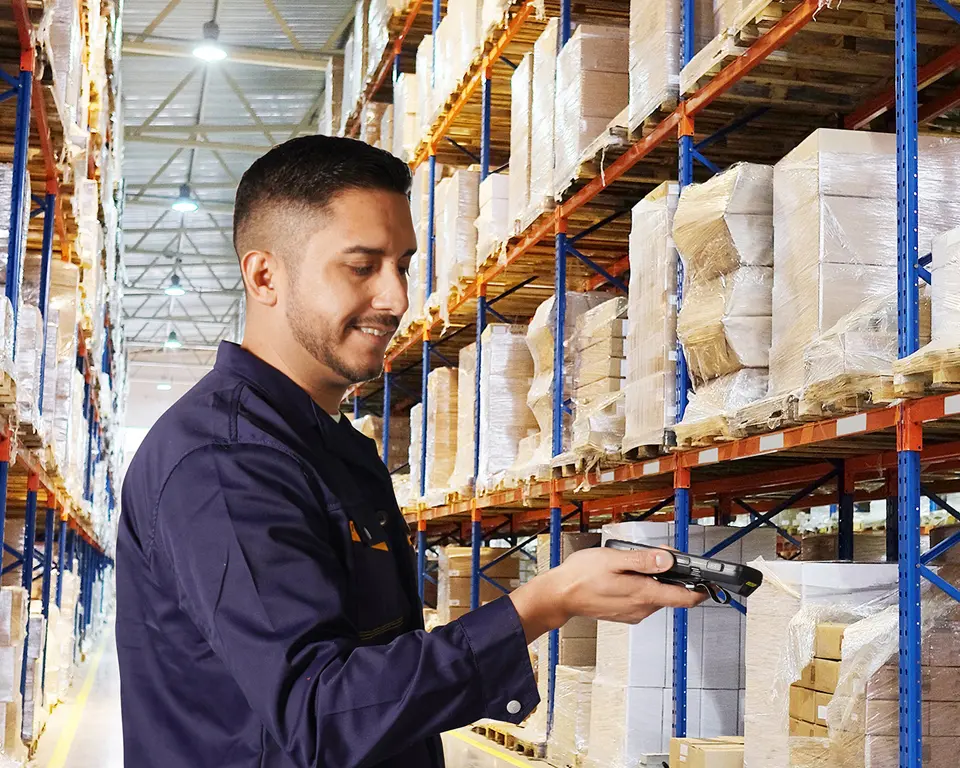
1. Industry Pain Point Analysis
In the industrial field, while the widespread use of mobile terminals enhances operational flexibility, it also exposes many deep-seated problems, which can be summarized into the following three points:
Outdated and Disconnected System Versions: Most old industrial terminals still use early operating systems, such as old Android versions. These systems cannot be compatible with emerging business applications, making it difficult for enterprises to support the expansion needs of business scenarios. For example, in warehousing, logistics, or manufacturing, newly developed scanning or management software often requires support from higher version operating systems, but old terminals cannot be upgraded, causing business interruption. More seriously, frequent system security vulnerabilities pose potential risks to enterprise data storage and business transmission. According to statistics, outdated systems are more susceptible to cyber attacks, increasing the difficulty of data security control and potentially even triggering data leakage incidents, affecting corporate reputation and compliance.
Inefficient Device Management: In industrial scenarios, terminal devices are widely distributed and numerous; for instance, large warehouses or production lines may deploy hundreds of devices. The traditional model of one-by-one configuration, manual updates, and on-site troubleshooting not only consumes significant IT manpower and time costs but also makes unified control difficult to achieve. This management gap leads to opaque device status, delayed updates, and slow fault response, thereby reducing overall operational efficiency. For example, in chain retail, terminal devices scattered across various stores, when managed manually, often result in inconsistent software versions, causing compatibility issues and increasing maintenance complexity.
Potential Hazards in Battery Life and Data Security: Issues such as aging terminal batteries or the use of non-standard batteries can easily lead to unexpected device shutdowns, operational interruptions, and even loss of important data. In high-intensity industrial environments, such as logistics sorting or outdoor operations, insufficient battery life can frequently interrupt workflows, affecting business continuity. Simultaneously, the lack of a comprehensive remote battery monitoring and early warning mechanism prevents risks from being avoided in advance, exposing enterprises to unnecessary operational halts. These pain points collectively form bottlenecks in industrial terminal applications, not only increasing the total cost of ownership but also hindering the depth of digital transformation.
Facing these systematic challenges, enterprises urgently need an integrated solution to break through technological bottlenecks. It is precisely in this context that the AUTOID 10 handheld mobile computer, with its innovative design, provides a seamless optimization path from system compatibility and management efficiency to security assurance.
2. A New Generation Industrial Digital Intelligent Terminal: AUTOID 10
The AUTOID 10 handheld mobile computer, as a new generation industrial intelligent terminal launched by SEUIC, provides a comprehensive and integrated solution addressing the aforementioned pain points. Developed based on an advanced platform, the device integrates high-performance hardware and intelligent software, aiming to enhance stability, efficiency, and security assurance. The following sections elaborate on these aspects—system operation, compatibility and longevity, battery life and security, and management efficiency—corresponding to the pain points.
In terms of system operation, the AUTOID 10 directly addresses the pain point of "outdated and disconnected system versions" by featuring the new Android 14 operating system and supporting iterative upgrades to the next-generation system, ensuring a longer device lifecycle. Early industrial terminals often could not be updated due to system固化, but the AUTOID 10, through system optimization, not only achieves perfect compatibility with various industrial applications, such as scanning, inventory management, and data collection software, but also significantly enhances device security. The latest security patches built into Android 14 reduce vulnerability risks, protecting enterprise data from threats. For example, in 3C electronics manufacturing scenarios, where devices need to run multiple customized applications, the AUTOID 10's system compatibility avoids application conflicts, while regular upgrades extend the technological lifespan, reducing enterprise replacement costs. Furthermore, its Octa-core processor and UFS 2.1 high-speed storage technology increase read/write speeds by 2-3 times, ensuring rapid response to business needs, which contrasts sharply with the lag of traditional terminals.
Regarding system compatibility and longevity, the AUTOID 10 further strengthens its capability to address "inefficient device management." The device can seamlessly integrate with Enterprise Mobility Management (EMM) platforms, enabling remote batch configuration, targeted software distribution, and fault diagnosis, which greatly simplifies operation and maintenance processes. Addressing the pain point of dispersed devices in industrial scenarios, the AUTOID 10's centralized management function allows for unified deployment strategies, reducing on-site workload.
In terms of battery life and data security assurance, the AUTOID 10 accurately solves the problem of "potential hazards in battery life and data security." The device is equipped with a 5360mAh high-capacity battery and, combined with intelligent power-saving technology, can support up to 16 hours of standby time, meeting the demand for all-day uninterrupted operation in industrial scenarios. The hot-swappable battery design allows for battery replacement without shutting down the device, completely avoiding data loss, which directly counters the battery hazards mentioned in the pain points.
Overall, the AUTOID 10 handheld mobile computer, through its system foresight, efficient manageability, and reliable security assurance, not only effectively resolves the pain points of traditional terminals but also helps enterprises build a stable, low-cost mobile operation system. In scenarios such as warehousing and logistics, manufacturing, and retail, it has become a core support for digital upgrade, assisting enterprises in reducing the total cost of ownership and achieving long-term value enhancement.
Founded in 2002, SEUIC Technologies Co., Ltd. has been committed to grasping core technologies, enhancing technological innovation, providing excellent self-owned brand products, including mobile computers, RFID readers, tablets, barcode scanners and fixed readers. With highly reliable products and efficient services, our products have been widely used in manufacturing, retail, logistics & transportation, healthcare and other industries. We provide frontline workers more durable real-time data collection tools, helping you do more thereby to catapult your productivity to the next level.
- Demystifying Manual Traceability Pains: How CRUISE2 5G Enables Barcode-Based Bidirectional Traceability2026-04-03
- Demystifying Slow Backroom Transfers: How UTouch 2-S Enables Second-Level Inventory Navigation2026-04-03
- Demystifying Quality Control Bottlenecks: How RFID Moves Towards Proactive Prevention2026-04-02
- How Handheld Computers Achieve End-to-End Traceability2026-04-02
- Demystifying Workstation Information Bottlenecks: How CRUISE2 5G Enables Paperless, Real-Time Operations2026-04-01