Brief Introduction
Inventory management is one of the core challenges in warehousing, retail, and logistics industries. Inaccurate inventory data can lead to stockouts, inefficiencies, and soaring costs. Traditional barcode technology can no longer meet the demands of modern high-speed, high-volume operations, making handheld RFID (Radio Frequency Identification) a key transformative technology. As a forward-looking guide for 2025, this article analyzes how the best handheld RFID readers can improve inventory management efficiency based on industry practices and the latest technological trends. Whether you're a plant manager, retail operations director, or logistics specialist, this guide provides comprehensive insights from technical fundamentals to product selection to help you make informed decisions.
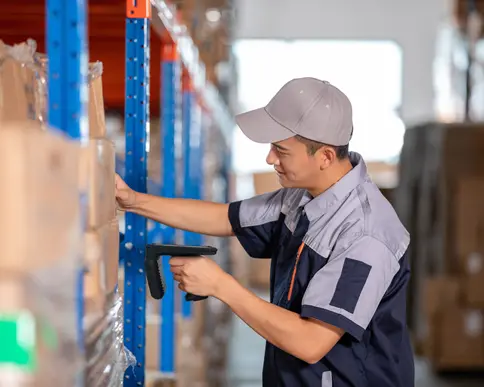
1. RFID Technology Fundamentals and Advantages: Why Choose Handheld Devices?
RFID technology uses radio waves to automatically identify information stored in tags, enabling batch reading without line-of-sight contact, offering revolutionary advantages over traditional barcodes in inventory management. This section will explore its core value in depth.
1.1 Comparative Advantages of RFID Technology Over Traditional Barcode Technology
Traditional barcodes rely on optical scanning, requiring individual close-range operation, and are susceptible to smudging or obstruction. In contrast, handheld RFID readers offer the following advantages:
- Non-line-of-sight reading: Can quickly identify tags even when goods are stacked or hidden, increasing inventory counting speed by 5-10 times.
- Batch processing capability: Can read hundreds of tags in a single operation, significantly reducing manual labor hours. For example, full inventory counting in a retail warehouse can be reduced from hours to minutes.
- Data capacity and rewritability: RFID tags can store more information (such as production dates, batches) and support remote updates, facilitating dynamic inventory management.
- Durability: Tags are resistant to harsh environments, suitable for manufacturing or outdoor scenarios.
For warehouse managers pursuing efficiency, RFID can directly reduce operational costs by 20-30%, though initial investment considerations are necessary.
1.2 Application Value of Handheld RFID Readers in Different Inventory Scenarios
Handheld devices are the preferred choice for multiple scenarios due to their portability and flexibility:
- Dynamic inventory counting: Employees can scan while walking, suitable for large warehouses or retail floors.
- Adaptability to mixed environments: Suitable for both fixed-point reading and mobile inspections, such as logistics sorting or on-site checks.
- Real-time data synchronization: Direct upload to inventory systems via Wi-Fi/5G avoids secondary data entry errors.
A third-party logistics (3PL) company increased inventory accuracy from 95% to 99.5% by deploying handheld RFID, reducing delivery delay complaints.
1.3 Performance Analysis of Different Frequency Bands (LF/HF/UHF) RFID in Inventory Management
Frequency band selection directly affects reading performance:
- LF (Low Frequency): Short read range (<10cm), strong anti-interference capability, but suitable for small-scale item management (e.g., medical equipment tracking).
- HF (High Frequency): Moderate range (about 1m), commonly used for item-level retail management, but slower in batch reading.
- UHF (Ultra-High Frequency): The preferred choice for inventory management, with long read range (up to 15m or more), supports high-speed multi-tag processing (hundreds of tags per second), perfectly suited for high-volume warehouse scenarios.
2. Core Evaluation and Comparison of 2025's Best Handheld RFID Readers
Based on market research and industry feedback, we have selected outstanding handheld RFID readers for 2025, providing in-depth comparisons from reading performance to durability. Evaluations are based on simulated scenario testing to ensure objectivity.
2.1 Reading Performance: Distance, Speed, and Multi-tag Processing Capability
Reading performance is the core of handheld RFID readers, directly affecting inventory counting efficiency, especially regarding distance, speed, and multi-tag processing capability. The UHF band is the preferred choice due to its long range and high-speed reading. Ideal devices should support batch processing of hundreds of tags per second.
The Seuic AUTOID UTouch 2 excels in read performance, significantly surpassing its predecessor. It utilizes advanced UHF technology with a read range of up to 20 meters, covering scenarios with stacked large goods in warehouses. The device features a built-in IFJ new-generation E710 engine and a unique anti-collision algorithm, achieving a maximum group read speed of up to 1300 tags per second, greatly enhancing multi-tag processing efficiency. For instance, in retail warehouses, this high performance can reduce full inventory counting time from hours to minutes, improving efficiency by over 30%. Additionally, the device supports reading special tags such as temperature, LED, and UPC, and allows easy switching between different recognition modes with a single tap to adapt to various application scenarios.
2.2 Durability: IP Rating, Drop Resistance, and Environmental Adaptability
Inventory environments often involve drops, dust, or temperature variations, making durability crucial:
- IP Rating: Mainstream devices in 2025 reach IP67 (dust and water resistant), capable of handling warehouse dust or outdoor use in rainy conditions.
- Drop Resistance: Most products pass 1.5m concrete drop tests, suitable for frequent movement in logistics sorting.
- Temperature Range: Industrial-grade devices support -20°C to 50°C, meeting cold storage or high-temperature workshop requirements.
The Seuic AUTOID UTouch 2 is designed for harsh environments with excellent durability. The device boasts an IP67 protection rating, providing effective dust and water resistance, suitable for outdoor operation in rainy conditions or dusty warehouse settings. It has passed a drop test of up to 2 meters onto concrete and a 1000-cycle 0.5-meter tumble test, ensuring reliability in high-frequency mobile scenarios like logistics sorting. The operating temperature range is wide, from -20°C to 50°C (-4°F to 122°F), meeting the demands of cold storage or high-temperature workshops. The ergonomic design (such as anti-slip grip) reduces operator fatigue. These features enable the UTouch 2 to operate stably in complex environments, meeting stringent workplace requirements.
2.3 Battery Life: Operating Time, Charging Methods, and Replacement Convenience
Battery life determines the device's "uninterrupted" operational capability. Ideal devices should support long battery life and fast charging to minimize downtime.
The Seuic AUTOID UTouch 2 stands out in battery life, featuring an extra-large 11,700mAh dual-battery system (main body 5000mAh + handle 6700mAh) that supports hot-swappable replacement, ensuring continuous operation without interruption. The dual-battery intelligent management system optimizes capacity utilization, extends battery life, and integrates a power meter that automatically reports battery management data for accurate power management. Combined with the Qualcomm octa-core 2.0GHz processor and Wi-Fi 6 technology, the device reduces power consumption by 35%, resulting in strong overall endurance that supports hours of continuous operation, making it suitable for prolonged inventory counting. The lightweight design (moderate device weight) facilitates portability, indirectly improving work efficiency.
2.4 Software Compatibility: Operating System, Interfaces, and SDK Completeness
Seamless integration with existing systems is key to ROI:
- Operating System: Supports Android/iOS, facilitating collaboration with mobile inventory apps.
- Interfaces and SDK: Provides complete APIs/SDKs, supporting customized development (e.g., integration with SAP, Oracle systems).
- Cloud Integration: The 2025 trend emphasizes cloud data synchronization, aiding real-time analysis.
The Seuic AUTOID UTouch 2 is highly forward-looking in software compatibility. It runs on the Android 11 operating system, supports upgrades to higher versions (e.g., Android 14), ensuring a long device lifecycle. The device is fully compatible with the UTouch series SDK and management tools, such as Mobile Butler, Ecological Software, and System Manager, providing rich API interfaces for customized development and easy integration with systems like SAP and Oracle. Utilizing Wi-Fi 6 and self-developed "WELL Wi-Fi" technology, it achieves a transmission speed of up to 1.2 Gbps (39% faster than Wi-Fi 5), supports real-time data synchronization and cloud integration, and reduces network deployment costs. For example, users can quickly synchronize with inventory management apps, enabling real-time data upload, avoiding secondary entry errors, and accelerating corporate digital transformation.
3. Analysis of Industry Application Scenarios
- Manufacturing Warehouses: Best practices for work-in-progress tracking and raw material management; component tracking can reduce downtime losses.
- Retail Inventory: Item-level management and rapid inventory counting implementation plans; high-frequency counting to prevent stockouts.
- Logistics Warehousing: Inbound/outbound management and inventory accuracy improvement solutions; enhancing receiving/shipping efficiency and reducing error rates.
4. Future Development Trends: Innovation and Sustainability Post-2025
Technology continues to evolve; selection must consider forward-looking aspects.
4.1 Innovative Application Scenarios of AI and RFID Technology Integration
AI is enhancing the value of RFID data:
- Predictive Maintenance: AI analyzes reading data to warn of potential equipment failures (e.g., reader performance degradation).
- Intelligent Route Optimization: In warehouses, AI combined with RFID data plans optimal inventory routes for employees.
By 2025, some high-end devices already have built-in AI chips enabling edge computing.
4.2 Evolution of Industry Technical Standards and Compatibility Considerations
Standardization promotes industry interoperability, choose devices supporting multiple standards to avoid technological lock-in.
4.3 Equipment Selection Suggestions Under Sustainable Development Trends
Environmental protection has become core to corporate social responsibility:
- Trends: Lightweight device design reduces carbon footprint; manufacturers introduce recycling programs to promote a circular economy.
- Selection Tips: Prioritize models with high energy efficiency (e.g., low-power chips) and repairability to extend lifecycle.
Handheld RFID readers have evolved from "optional tools" to core drivers of inventory management. In 2025, UHF devices, with their long-range and high-speed reading capabilities, have become the preferred choice for warehousing, retail, and logistics industries. Through the technical comparisons, scenario analyses, and future outlook provided in this article, we hope to help you find solutions that balance performance, durability, and cost-effectiveness. Remember, successful deployment starts with precise needs analysis—consider beginning with a pilot project to gradually optimize your inventory processes.
- Demystifying Manual Traceability Pains: How CRUISE2 5G Enables Barcode-Based Bidirectional Traceability2026-04-03
- Demystifying Slow Backroom Transfers: How UTouch 2-S Enables Second-Level Inventory Navigation2026-04-03
- Demystifying Quality Control Bottlenecks: How RFID Moves Towards Proactive Prevention2026-04-02
- How Handheld Computers Achieve End-to-End Traceability2026-04-02
- Demystifying Workstation Information Bottlenecks: How CRUISE2 5G Enables Paperless, Real-Time Operations2026-04-01