Brief Introduction
In today's fast-paced industrial and commercial environments, efficiency and accuracy are crucial. Whether you're a plant manager responsible for production lines, a retail operations director handling inventory, or a healthcare administrator tracking medical assets, manual data entry errors and delays waste time and money. Radio Frequency Identification (RFID) technology offers a seamless solution, at the heart of which is the RFID reader – a device capable of wirelessly capturing data automatically. But how exactly does an RFID reader work? This article delves into the principles, components, and processes of RFID readers, tailored specifically for professionals like you, providing reliable, actionable insights. After reading, you will not only understand the technology but also know how to apply it in your field.
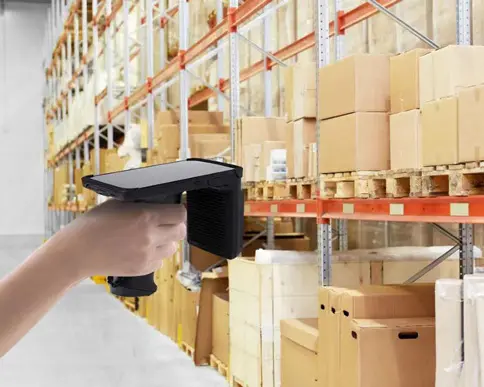
1. How Do RFID Readers Work? A Step-by-Step Explanation
An RFID reader is the core of an RFID system, enabling contactless communication with tags to retrieve data. From a high level, an RFID reader emits radio waves to activate nearby RFID tags, which then return stored information. But the devil is in the details – let's understand the basics before diving into the principles.
1) Understanding RFID System Fundamentals
An RFID system consists of three key components:
l RFID Reader: The device that sends and receives signals. It can be fixed (e.g., installed at a doorway) or handheld (e.g., for mobile scanning).
l RFID Tag: A microchip attached to an antenna, embedded in items like products, assets, or ID cards. The tag stores a unique identifier and other data.
Antenna: Integrated into both the reader and the tag, facilitating signal transmission. The reader's antenna broadcasts the signal, while the tag's antenna captures it. RFID operates on different frequency bands (e.g., Low Frequency, High Frequency, Ultra-High Frequency), which affect read range and performance. For example, UHF RFID is common in logistics due to its longer read range.
2) Core Components of an RFID Reader
To understand how an RFID reader works, one must understand its internal parts:
l Transceiver: Generates and transmits the radio frequency signal.
l Processor: Decodes the data received from the tags and interfaces with backend systems.
l Antenna Array: Often has multiple antennas to cover a wider area or for directional scanning.
l Power Supply: Varies by type – active readers have built-in batteries, while passive readers rely on external power or energy from the tag.
These components work together to ensure reliable communication even in challenging environments like noisy factories or crowded warehouses.
2. How RFID Communication Works: The Detailed Process
The interaction between an RFID reader and a tag follows a sequence of steps. Here is a simplified yet comprehensive explanation:
l Signal Transmission: The reader's transceiver emits radio waves via its antenna. This creates an electromagnetic field around the reader.
l Tag Activation: When an RFID tag enters this field, its antenna absorbs energy from the waves. For passive tags, this energy powers the microchip; active tags use their own battery.
l Data Response: The activated tag modulates the signal with its stored data (e.g., serial number or asset details) and reflects it back to the reader.
l Signal Reception: The reader's antenna captures the reflected signal, and the processor decodes it into readable information.
l Data Processing: The reader forwards the data to a connected system, such as inventory software or a database, for real-time action.
This entire process happens in milliseconds, allowing high-speed scanning of multiple tags simultaneously – a key advantage over barcodes.
3. Active vs. Passive RFID Readers: Key Differences
RFID readers are categorized by their power source and communication style. Understanding this distinction is crucial for selecting the right tool for your needs.
1) Active RFID Readers
l How they work: These readers have built-in batteries and continuously broadcast signals. Active tags also contain batteries and respond actively, enabling long-distance communication (up to 100 meters or more).
l Ideal use cases: Applications requiring real-time tracking over large areas, such as vehicle management in logistics or monitoring high-value assets in factories.
Example: In a warehouse, an active RFID system can track forklifts moving between zones without manual intervention.
2) Passive RFID Readers
l How they work: Passive readers rely on energy transmitted to the tags (which are powered by the reader's signal). They have a shorter read range (typically a few meters) but are cost-effective and maintenance-free.
l Ideal use cases: Short-range scanning, such as inventory counting in retail stores or access control in healthcare facilities.
Example: A passive RFID reader at a store entrance can quickly scan tags as items pass through, reducing checkout time.
4. Practical Applications of RFID Readers: Cross-Industry Cases
RFID technology isn't just theoretical – it's transforming operations worldwide. Here's how it applies to your role, based on the target audience:
1) Manufacturing and Quality Control
For plant managers and production supervisors, RFID readers automate work-in-progress tracking. By tagging components, readers capture data at each stage, reducing errors and improving lean manufacturing. For example, an RFID system can alert QC personnel if a part misses inspection, ensuring compliance.
2) Retail and Inventory Management
Store managers and retail chain operators use handheld RFID readers, like the AUTOID UTouch, for rapid inventory counts. Unlike barcodes, RFID can read multiple items simultaneously, cutting inventory time by up to 80%. This real-time visibility prevents stockouts and overstocking.
3) Logistics and Supply Chain
In 3PL companies or e-commerce fulfillment centers, fixed RFID readers installed at dock doors scan pallets without line-of-sight. This enables seamless tracking from warehouse to delivery, helping operations directors monitor SLAs and reduce losses.
4) Healthcare and Asset Tracking
Hospitals deploy RFID to manage medical equipment, medicines, and patient records. Caregivers can instantly locate critical equipment, while pharmacy departments prevent theft or expiration.
5) Public Services and Utilities
For meter readers or field inspectors at gas/water companies, mobile RFID readers streamline asset audits. Government agencies use them for law enforcement, such as verifying credentials in the field.
5. Choosing the Right RFID Reader: Considerations
When implementing RFID, consider:
l Read Range: Active for long-distance, passive for close-range.
l Environment: Industrial readers need durability against dust, moisture, or interference.
l Integration: Ensure compatibility with existing ERP or IoT platforms.
l Cost: Balance upfront investment against long-term ROI from efficiency gains.
Consult experts or suppliers to tailor the solution to your needs.
RFID readers are more than just scanners – they are enablers of efficiency, accuracy, and real-time visibility. By understanding how they work, from signal transmission to data decoding, professionals like you can make informed decisions to optimize operations. Whether in manufacturing, retail, logistics, healthcare, or public services, the right RFID solution delivers significant benefits.
- Demystifying Manual Traceability Pains: How CRUISE2 5G Enables Barcode-Based Bidirectional Traceability2026-04-03
- Demystifying Slow Backroom Transfers: How UTouch 2-S Enables Second-Level Inventory Navigation2026-04-03
- Demystifying Quality Control Bottlenecks: How RFID Moves Towards Proactive Prevention2026-04-02
- How Handheld Computers Achieve End-to-End Traceability2026-04-02
- Demystifying Workstation Information Bottlenecks: How CRUISE2 5G Enables Paperless, Real-Time Operations2026-04-01