Brief Introduction
Imagine this scenario: a warehouse manager urgently needs real-time inventory data for a specific batch, but the information is stuck in last night's count sheet; a picker using outdated equipment clicks through complex menus, adding seconds to each order picking task; a new employee faces a specialized, closed system requiring a week of training before working independently.
In today's business environment where logistics speed determines success, warehouse efficiency bottlenecks often manifest as data delays, cumbersome operations, fragile equipment, and closed systems. Traditional dedicated data collection terminals or non-rugged consumer-grade devices can no longer meet modern warehousing's demanding requirements for real-time performance, flexibility, durability, and intelligence.
One choice gaining momentum in the industrial sector is: the Android industrial handheld terminal. It's not just about bringing smartphone-like experience to industrial settings, but represents a transformative shift in operational models. This article will deeply analyze why choosing an Android Industrial Handheld Terminal for warehouse operations is a strategic step toward intelligent, visual management.
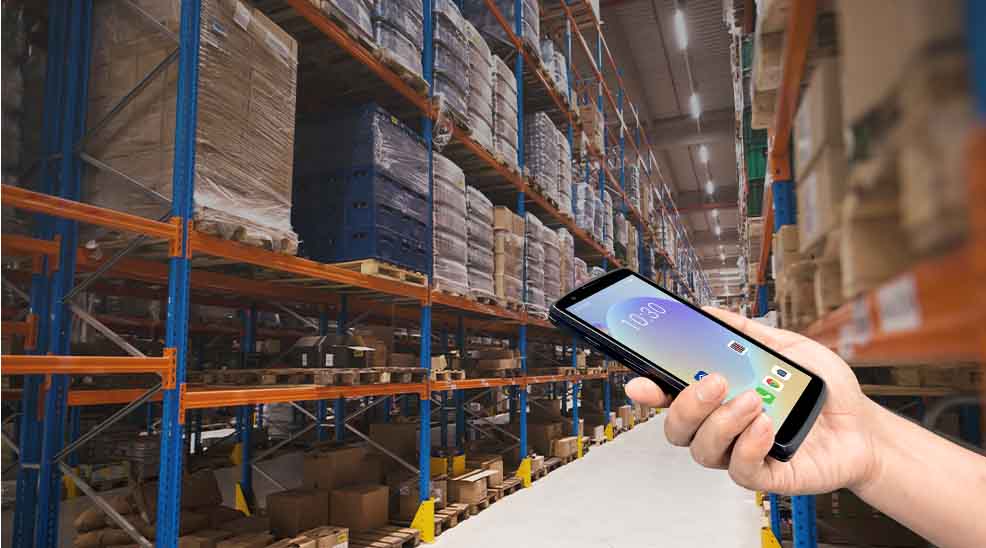
1. Industrial Handheld Terminals: Why Have They Become "Standard Equipment" in Modern Warehousing?
Before delving into Android, we must first understand the inherent value of industrial handheld terminals (also called rugged handheld computers or industrial PDAs). It's far more than just a "barcode scanner"; it's a mobile computing center that integrates data collection, processing, transmission, and display.
Real-time Data-driven Decisions: Enables real-time data collection and synchronization throughout the entire process from receiving, storage, picking, sorting to shipping, eliminating information silos.
Process Standardization for Cost Reduction and Efficiency Gain: Guides employee operations through pre-set task instructions, standardizing procedures, reducing errors, and improving speed and accuracy.
Asset Visibility and Management: Easily tracks the location and status of pallets, shelves, forklifts, and even individual items.
Withstanding Harsh Environments: Designed for industrial settings with features like dustproof, waterproof, and drop resistance (often certified by IP67, MIL-STD-810H), ensuring stable 24/7 operation.
So, among various operating systems, why does Android stand out?
2. Core Advantages: Why Choose an Android Industrial Handheld Terminal?
Choosing Android isn't just about following trends; its ecosystem and characteristics perfectly align with the upgrade needs of modern warehouse operations.
2.1 Openness and Rich Application Ecosystem
Compared to closed, proprietary systems, Android's openness offers limitless possibilities. Warehouses can select or custom-develop applications like WMS, TMS, EAM from the vast global app market based on their specific needs. This translates to greater business adaptability flexibility and lower secondary development costs.
2.2 Low Training Cost and Rapid Onboarding
Most employees are already familiar with the Android interface. Intuitive icons, gesture controls, and universal app logic allow new employees to start almost with "zero training," significantly reducing training investment and time costs, as well as error rates caused by operational unfamiliarity.
2.3 Powerful Hardware and Performance
Modern Android industrial handheld terminals are equipped with powerful multi-core processors, large memory, and HD touchscreens, capable of running complex warehouse management applications smoothly, handling multitasking like simultaneous scanning, navigation, and communication software, ensuring smooth operation without lag.
2.4 Excellent Connectivity and Integration Capabilities
Support for various communication methods like 4G/5G, Wi-Fi 6, Bluetooth 5.0, GPS/BeiDou ensures stable network connection even in complex warehouse environments (e.g., metal shelving areas), enabling seamless real-time data transmission.
2.5 Professional Enterprise-grade Management Support
Through solutions like Android Enterprise, IT administrators can remotely deploy apps in bulk, configure policies uniformly, lock device functions (e.g., only allow specified warehouse apps), and ensure secure system updates, enabling efficient device lifecycle management.
2.6 Future-oriented Scalability
As technologies like IoT, AI, and AR are applied in warehousing, the Android platform can integrate these cutting-edge technologies more easily, protecting your investment from rapid obsolescence.
3. Key Selection Factors: A Must-Consider Checklist
Faced with numerous industrial PDA android and warehouse handheld scanner options on the market, how to make a wise choice? Please refer to the following checklist:
Ruggedness and Durability: Confirm IP rating (e.g., IP65 dust/water resistant, IP67 submersible) and military-grade drop standards (e.g., MIL-STD-810H). This is the foundation for long-term reliable operation in warehouse environments.
Data Capture Capability: Choose 1D/2D barcode scanning engines (for dense/screen/damaged code reading) or UHF RFID read/write modules based on needs. Excellent scanning performance directly ensures efficiency.
Battery and Endurance: Consider battery capacity and hot-swappability (allowing battery change without powering off), crucial for warehouses with shift work or continuous operation.
Display and Operability: Screen size, brightness (outdoor visibility), and touch sensitivity (supporting gloved or wet hands) directly affect the user experience.
Networking and Positioning: Ensure support for sufficient 4G/5G bands, dual-band Wi-Fi, and high-precision GPS/BeiDou to meet seamless indoor/outdoor positioning needs.
Enterprise-grade Management: Confirm if the device supports Android Enterprise or manufacturer-provided MDM (Mobile Device Management) tools.
4. Industry Application Scenarios at a Glance
Receiving and Putaway: Scan receiving lists and item barcodes, update inventory in real-time, guide putaway to optimal locations.
Inventory Counting: Use RFID or high-speed barcode scanning for quick full or cycle counts, achieving over 99.9% accuracy.
Order Picking: Utilize voice picking or on-screen guidance to optimize paths, simplify operation ("idiot-proof"), improving picking efficiency and accuracy.
Outbound Review and Loading: Verify outbound orders against physical goods, scan during loading, enable shipment visibility.
Internal Movement and Replenishment: Execute internal moves and location replenishment based on system commands, ensuring optimal stock distribution.
5. Recommendation for You: SEUIC AUTOID Series Android Industrial Handheld Terminals
Among many brands, SEUIC, as a leading global AIDC (Automatic Identification and Data Collection) solution provider, offers the reliable AUTOID series of Android industrial handheld terminals for warehouse operations.
Take the SEUIC CRUISE2 5G rugged handheld computer as an example; it perfectly embodies all the selection criteria mentioned above:
Extreme Ruggedness: IP68 rating (with or without battery), passed 60+ reliability tests (1.5m drop, high/low temperature, etc.), meets harsh environment demands.
Top Performance: Features an octa-core high-performance processor and Android 13 OS, ensuring smooth operation of complex applications.
All-scenario Connectivity: Supports 5G, Wi-Fi 6E (2.4GHz/5GHz/6GHz bands) and 2x2 MIMO technology, ensuring stable connectivity anywhere in the warehouse.
Professional Data Capture: Excellent barcode scanning capability meets various identification needs from retail items to logistics pallets.
Excellent Battery Life: Supports hot-swappable batteries, the 5000mAh high-capacity battery provides long endurance, meeting high-intensity operation demands.
Enterprise-grade Management: Fully supports Android Enterprise for easy centralized IT management.
Choosing an Android industrial handheld terminal is essentially selecting an open, intelligent, efficient, and future-oriented mobile productivity platform for your warehouse operations. It breaks the limitations of traditional equipment, combining consumer-grade ease-of-use with industrial-grade reliability, directly empowering every frontline employee and driving a qualitative leap in overall operational efficiency.
In the wave of digital transformation, upgrading your warehouse handheld scanner isn't just replacing a device; it's upgrading your warehouse's "nervous system." From real-time data insights to seamless workflows, investing in a suitable Android industrial handheld terminal is a key step to enhance your competitiveness, reduce costs, and achieve lean management.
- Demystifying Manual Traceability Pains: How CRUISE2 5G Enables Barcode-Based Bidirectional Traceability2026-04-03
- Demystifying Slow Backroom Transfers: How UTouch 2-S Enables Second-Level Inventory Navigation2026-04-03
- Demystifying Quality Control Bottlenecks: How RFID Moves Towards Proactive Prevention2026-04-02
- How Handheld Computers Achieve End-to-End Traceability2026-04-02
- Demystifying Workstation Information Bottlenecks: How CRUISE2 5G Enables Paperless, Real-Time Operations2026-04-01