Brief Introduction
At the core hubs of e-commerce logistics, retail distribution, manufacturing, and even medical supplies management—sorting centers—we are collectively facing a silent "efficiency crisis." Have you also witnessed scenes like this: workers on the conveyor line staring intently at barcode scanners, frequent "mis-sorting" of goods causing them to go down the wrong chute, massive piles of packages accumulating in the buffer zone waiting to be processed, requiring a large temporary increase in manpower during every major sales promotion, and "difficulty finding goods" and "slow inventory counting" becoming the operational norm.
The root of these problems lies in the fact that the traditional sorting models based on barcodes or pure manual labor have hit the "efficiency ceiling" and become a "breeding ground for errors." Today, we will delve into a disruptive solution: automated sorting systems based on RFID readers. It is not just a technological upgrade, but a fundamental change in operational thinking and management models.
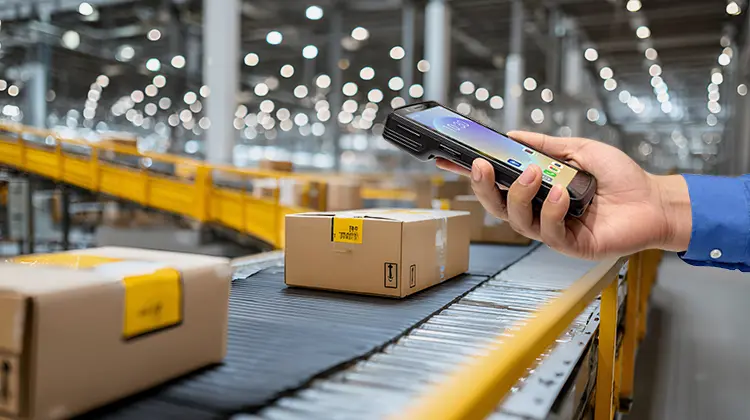
1. Efficiency Ceiling and Error Breeding Ground: The Pain of Traditional Sorting Models
Before delving into technical details, let's first clarify the pain points. Whether you are a warehouse manager, logistics operations director, or production supervisor, the following scenarios are absolutely familiar:
Efficiency bottlenecks: Barcode scanning requires "one-to-one" and "visual alignment." There is a physical upper limit to the speed when processing hundreds or thousands of SKUs or packages. Peak period capacity cannot be scaled elastically.
High error rate: Manual sorting relies on employee experience and attention. Fatigue, lighting, and the angle of goods placement can all lead to mis-scans and missed scans. Incorrect sorting directly leads to customer complaints and a surge in reverse logistics costs.
Information black hole: The status of goods before entering the automated sorting line or after leaving is often unknown. Where are they? Are the quantities correct? We can only rely on periodic manual inventory counting, resulting in severely lagging data.
Labor dependency and costs: Investments in automated sorting lines are huge, but a large number of pre-sorting (receiving, putaway) and post-sorting (outbound verification, loading) stages still heavily rely on labor, making management complex and facing the pressure of continuously rising labor costs.
Process rigidity: Unable to cope with diverse sorting demands (such as order-based sorting, store-based allocation, category-based consolidation), resulting in poor flexibility.
2. Principles of RFID Sorting: Why It Can Achieve "Second-Level Inventory" and "Touchless Identification"
To understand why RFID (Radio Frequency Identification) can solve the aforementioned problems, the key lies in its core difference from barcode technology.
Traditional Barcodes/QR Codes: This is "image recognition." Requires an optical line of sight and alignment, can only scan one item at a time, and is susceptible to damage, soiling, and obstruction.
RFID (Especially UHF RFID): This is "radio wave recognition." Its core components include RFID tags (attached to goods or carriers) and UHF RFID readers (fixed or handheld).
Batch Reading, Completed Instantly: The readeremits radio waves through an antenna, activating all RFID tags within its range (several meters to over ten meters). The tags reflect electromagnetic waves carrying unique ID codes. This means that a pallet of goods or a whole cart of packages can have their identities identified and quantities counted instantly, without the need for individual targeting. This is the foundation for achieving "second-level inventory" and "touchless passage."
Non-Line-of-Sight, Strong Penetration: RFID radio waves can penetrate non-metallic packaging materials and cartons. Even if goods are stacked or tags are partially obstructed, they can be read effectively, greatly reducing operational difficulty.
Large Data Capacity, Read/Write Capable: Unlike barcodes, which can only store fixed information, RFID tags can store a large amount of information (such as production date, batch, destination) and can have their status updated during the process (such as "sorted," "loaded"). This turns each item into a moving data node.
The disruptive nature is reflected in: sorting efficiency is no longer limited by the speed of a single scanning action, but rather by the reader's ability to process data in batches. Sorting accuracy is ensured by system logic, almost eliminating human error.
3. Practical Application of RFID Readers in Three Core Sorting Scenarios
Theory needs to be combined with practice. Below, we will break down the specific application of RFID readers in three key links of the sorting center, to see how they integrate into workflows and create value.
Scenario 1: Receiving and Putaway - Unloading and Inspection from "Hours" to "Minutes"
Traditional Process: Unloading -> Manual scanning of barcodes one by one for system entry -> Counting quantity -> Handling discrepancies -> Completing putaway. Time-consuming and error-prone.
RFID Upgrade Solution: Install fixed UHF RFID readers and antennas at the receiving dock entrance or above the unloading area. When whole pallets of goods or standardized containers (like express carts, postal bags) with RFID tags attached enter the area, the system instantly completes batch identification, automatically compares with the Advanced Shipment Notice (ASN), and provides real-time alerts for quantity and category discrepancies. Receiving efficiency can be improved by over 90%, achieving 100% accuracy in arrival data, laying a solid foundation for subsequent sorting.
Scenario 2: Core Sorting and Diversion - Dynamic Routing and Zero-Error Sorting
Traditional Process: Set up multiple scanning points on the sorting line. Packages must pass through precise mechanical positioning to be identified by the scanner, then the PLC controls the diverter arm to push them into the corresponding chute or sorting bin. High requirements for package shape and placement.
RFID Upgrade Solution: Deploy high-speed fixed RFID readers above key nodes of the sorting line (such as convergence points, diversion decision points). When packages with RFID labels attached pass by at high speed (≥2 m/s), the readers can capture their identity information in real-time. The system immediately matches it with the sorting instruction and controls the actuator to divert it to the correct destination channel (such as the corresponding express area, store number, or order batch). The entire process requires no pause, no alignment, supports high-speed automated sorting, and the error rate approaches zero.
Scenario 3: Outbound Verification and Loading - Ensuring "What Leaves Matches the List"
Traditional Process: Before outbound, manual picking and verification are needed again based on the shipping list; during loading, loading sequence and quantity need to be recorded. The process is cumbersome, prone to over-shipment or under-shipment.
RFID Upgrade Solution:
Outbound Verification: Install RFID portal readers at the outbound passage. When whole pallets or whole cartloads of goods are transported out by forklift, batch scanning is completed instantly, automatically checked against the outbound list, with alarms and interception for any exceptions.
Intelligent Loading Guidance: At the loading dock, operators use industrial-grade handheld RFID readers to scan the RFID tags of goods to be loaded. The system can indicates the vehicle and loading position (optimized loading sequence based on delivery route). After loading is complete, quickly scan the goods inside the vehicle door to automatically generate an electronic proof of delivery, ensuring consistency of "goods, vehicle, and document."
4. Choosing the Best RFID Reader for Your Sorting Center: Key Selection Criteria
Faced with the dazzling array of UHF RFID readers on the market, how to make a wise choice? The following points are key considerations:
Operating Environment and Installation Method:
Fixed Readers: Used for fixed points like portals, passages, and sorting lines. Consider IP protection rating (e.g., IP65/IP67 for dust and water resistance) and suitability for industrial environments (vibration resistance, wide temperature range).
Handheld Readers: Used for mobile inventory counting and on-site verification. Consider weight, battery life, drop protection, and screen visibility (under strong outdoor light).
Performance Parameters:
Reading Speed and Multi-Tag Processing Capability: This is a core indicator, referring to the number of tags that can be accurately identified per second. High-speed sorting scenarios require extremely high read rates and processing speeds.
Reading Distance and Range: Determined by reader power and antenna. Dock portals require medium to long-distance, wide-area coverage; sorting lines require medium-distance, precise directional reading.
Anti-Interference Capability: In environments dense with metal shelving, liquid goods, or with multiple readers operating simultaneously, equipment with good anti-collision algorithms and anti-interference performance is needed.
Frequency and Protocol: Ensure the reader supports the radio frequency of your business region (e.g., 920-925MHz in China, 902-928MHz in North America) and complies with mainstream protocol standards (e.g., EPCglobal Gen2).
Antenna Selection: The antenna determines the reading area shape (sector, omnidirectional, directional). It is necessary to match the appropriate antenna according to the specific installation location and coverage requirements.
Software and Integration Friendliness: The reader should provide rich API interfaces and SDK development kits to facilitate seamless integration with your existing Warehouse Management System (WMS), Sortation Control System (SCS), or Enterprise Resource Planning (ERP) system. The openness of the ecosystem is crucial.
Durability and Total Cost of Ownership (TCO): Choose a brand with a good reputation in the industry that provides reliable after-sales service and technical support. Stable equipment can reduce downtime, resulting in a lower TCO in the long run.
5. Success Case: How RFID Readers Drive Transformation in Sorting Centers
The global express giant J&T Express faced a highly representative challenge: its huge transit centers needed to handle the daily inventory counting and allocation of 5,000 to 8,000 eco-bags. Relying on traditional barcode technology was inefficient, with a huge workload, becoming a key bottleneck in its package sorting process.
Solution:
The core solution adopted by J&T Express is a dual innovation in the "identification carrier" and "data acquisition method" for package consolidation units:
- Replaced disposable woven bags with RFID-enabled eco-bags: Upgraded traditional woven bags to reusable eco-bags, attaching a UHF RFID label to each bag to replace the original barcode. This change laid the foundation for subsequent automated data acquisition.
- Deployed UTouch 2 UHF RFID readers to achieve batch rapid scanning: Deployed UTouch 2 UHF RFID handheld readers at key nodes of the sorting center. This device can perform contactless, long-distance, batch rapid reading of stacked eco-bags without needing to locate and aim at barcodes one by one. This made data acquisition work in scenarios such as eco-bag bundling, inbound/outbound inventory counting, and warehouse relocation extremely efficient and effortless.
Results:
By deploying the express logistics solution centered on the UTouch 2 UHF RFID reader, J&T Express achieved the following transformative operational benefits:
- Achieved an exponential improvement in scanning efficiency: Leveraging the rapid batch reading capability of UHF RFID technology, it scanned 2,000 eco-bags in 2 minutes with an accuracy rate as high as 99%. Compared to traditional methods, efficiency achieved a qualitative leap.
- Achieved significant direct cost savings: Replaced disposable woven bags with reusable RFID eco-bags, fundamentally reducing material consumption costs.
- Built a comprehensive and efficient package tracking system: High-speed, accurate batch data acquisition enabled the real-time and precise recording and tracking of the flow status of each eco-bag (and the packages inside it), greatly improving the transparency and controllability of the entire logistics network.
This case clearly demonstrates that the application of RFID readers is not just about replacing scanners. By reconstructing workflows, it solves fundamental problems at the level of sorting efficiency and asset visibility, providing a solid digital foundation for the operation of large logistics hubs.
From "people finding goods, people watching codes" to "goods finding people, data-driven," RFID readers are the core engine driving the transformation of sorting centers from labor-intensive to technology-intensive. By solving the problems of batch identification, contactless reading, and data real-time synchronization, they directly target the three major pain points of traditional sorting models in efficiency, accuracy, and visibility. Investing in RFID sorting solutions is not just about purchasing a batch of hardware; it is a strategic upgrade of your entire operational process. The value it brings is multifaceted: direct labor cost savings, improved customer satisfaction and brand reputation due to increased accuracy, and the long-term optimization benefits generated from data-driven decision-making throughout the entire process.
Founded in 2002, SEUIC Technologies Co., Ltd. has been committed to grasping core technologies, enhancing technological innovation, providing excellent self-owned brand products, including mobile computers, RFID readers, tablets, barcode scanners and fixed readers. With highly reliable products and efficient services, our products have been widely used in manufacturing, retail, logistics & transportation, healthcare and other industries. We provide frontline workers more durable real-time data colle- Demystifying Manual Traceability Pains: How CRUISE2 5G Enables Barcode-Based Bidirectional Traceability2026-04-03
- Demystifying Slow Backroom Transfers: How UTouch 2-S Enables Second-Level Inventory Navigation2026-04-03
- Demystifying Quality Control Bottlenecks: How RFID Moves Towards Proactive Prevention2026-04-02
- How Handheld Computers Achieve End-to-End Traceability2026-04-02
- Demystifying Workstation Information Bottlenecks: How CRUISE2 5G Enables Paperless, Real-Time Operations2026-04-01