Brief Introduction
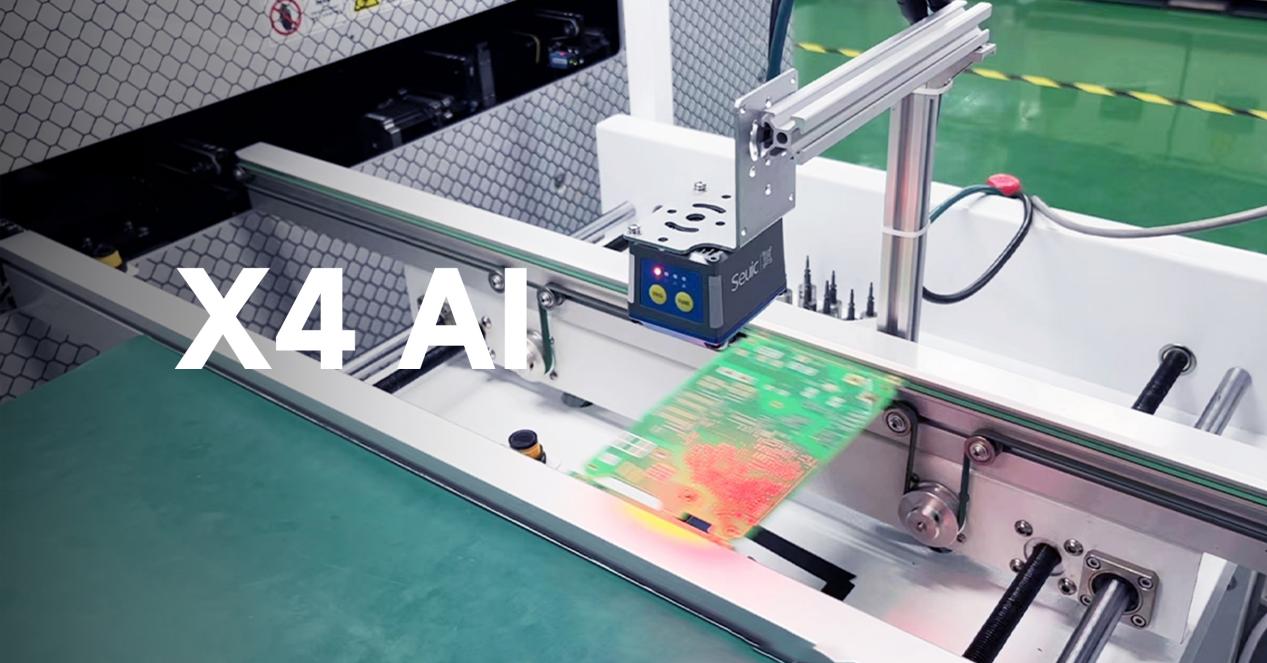
In today's photovoltaic manufacturing industry moving towards "unmanned operation" and "extreme efficiency," every solar cell and module on the production line must be accurately traced. However, the high reflectivity of silicon wafer surfaces, complex process backgrounds, and the high-speed flow of production lines have made code reading a recognized technical challenge in the industry. A global leading photovoltaic enterprise, in its newly operational smart factory, successfully increased the code reading rate at key production line nodes to a new industry high of 99.95% by introducing the SEUIC X4 AI Industrial Fixed Reader. This has completely solved the problems of production line stoppages and quality traceability difficulties caused by missed information reading.
1. The Pain Points of Photovoltaic Module Traceability: Why is it Difficult to Break Through the Code Reading Rate Barrier?
Photovoltaic modules consist of multiple layers of materials such as silicon wafers, solar cells, glass, and frames. The production process poses multi-dimensional challenges for code reading equipment:
Intense Surface Reflection: Silicon wafers and cell surfaces are smooth, making them highly prone to specular reflection under production line lighting, causing code dots to be drowned out by halos.
Low Contrast and Complex Backgrounds: Codes are laser-marked directly on the material surface, resulting in extremely low contrast. Moreover, backgrounds often have complex grid lines, textures, or backsheet patterns, severely interfering with recognition.
Fast Production Line Speed, Tight Cycle Time: High-speed conveyor lines require code readers to complete recognition within milliseconds. Any delay or failure can cause material jams or production stoppages.
Varied Code Types and Positions: The need to read different code types such as DataMatrix codes, QR codes, etc., simultaneously, and positions may change with variations in component specifications.
2. SEUIC X4 AI: Breaking Optical Limits with AI Vision
After comparing multiple devices, this photovoltaic giant found that traditional code readers rely on fixed algorithms, making it difficult to adapt to the optical characteristics of photovoltaic materials. The SEUIC X4 AI Industrial Fixed Reader became the key to solving this dilemma with the following core technologies.
2.1 Deep Learning Algorithms: Enabling the Device to "Understand" Complex Images
Intelligent Feature Extraction: The deep learning model built into the X4 AI, trained on massive amounts of photovoltaic industry images, can intelligently distinguish between cell grid lines and actual code dots. Even under conditions of low contrast and severe background noise interference, it can accurately extract encoded information.
Adaptive Error Correction: For codes distorted or incomplete due to process fluctuations, the AI algorithm possesses powerful reconstruction capabilities, with a recognition rate far exceeding that of traditional algorithms.
2.2 Optical Hardware Innovation: Conquering the Challenge of High Reflectivity
Customized Semi-Polarized Model: To address the high reflectivity characteristics of silicon wafers and glass, this project adopted the semi-polarized optical design model of the X4 AI. Polarization technology effectively filters diffuse reflection glare while ensuring sufficient light intake, making originally "invisible" code dots appear clearly.
Multi-Angle Controllable Lighting: Provides white or red LED lighting, allowing selection of the optimal light source based on different materials (e.g., blue-black cells vs. transparent glass), further highlighting character outlines.
2.3 Millisecond Response, Perfectly Matching High-Speed Production Lines
Global Shutter Sensor: Equipped with a 1.3-megapixel global shutter CMOS sensor, capable of clearly capturing images of fast-moving components, eliminating motion blur.
High-Speed AI Inference: A powerful processing core ensures the AI algorithm completes image preprocessing, decoding, and data output within milliseconds, seamlessly integrating with the production line cycle time.
2.4 Industrial-Grade Reliability, Adapting to Harsh Workshop Environments
IP67 Protection: Completely dustproof and can withstand high-pressure water mist cleaning, suitable for potential cleaning steps in photovoltaic workshops.
Compact and Easy to Integrate: A lightweight body of only 220g and compact dimensions facilitate installation in space-limited conveyor line workstations, and debugging is simple.
2.5 Practical Results: A Qualitative Change from 98.5% to 99.95%
After deploying the SEUIC X4 AI at two key workstations, pre-lamination and final testing, for this photovoltaic giant's modules, immediate results were achieved:
Before deploying the SEUIC X4 AI Industrial Fixed Reader, this photovoltaic giant faced the "invisible pain" common to almost all high-speed production lines: a code reading rate of about 98.5% with traditional readers might seem not low, but for a super factory producing tens of thousands of modules daily, that 1.5% missed reading meant hundreds of modules could not be automatically captured by the system every day. These "information silos" led to frequent material jams on the production line and frequent manual intervention, not only dragging down overall equipment efficiency but also leaving irreparable blind spots for the entire process quality traceability. After introducing the SEUIC X4 AI, the situation changed qualitatively. The optical adaptability based on deep learning made the once troublesome highly reflective silicon wafers and low-contrast laser codes nowhere to hide. The comprehensive code reading rate surged to 99.95%. This numerical leap directly translated into a sharp reduction in daily production stoppages caused by code reading failures, from nearly 10 times to less than once per week, and the production line's Overall Equipment Effectiveness (OEE) thereby improved by about 4.5%. The client's production manager remarked: "In the past, we accepted that we had to assign someone specifically to handle that 1.5% of exceptions. Now, the X4 AI has made 'exceptions' truly exceptional. That 0.5% missed reading is no longer our tolerance threshold; it's the confidence driving us towards a 'lights-out factory.'" The leap from 98.5% to 99.95% is not just a quantitative change in reading accuracy; it is a qualitative change in data integrity in smart manufacturing, moving from "breakpoints" to a "full closed loop."
Customer feedback: "Before introducing the SEUIC X4 AI, we almost accepted the reality that 'there are always a few hundred modules that cannot be read automatically,' requiring manual entry, which was not only inefficient but also a blind spot for quality traceability. The 99.95% code reading rate of the X4 AI means our traceability system has truly achieved a full closed loop. It is not just an equipment upgrade; it is a crucial step in our move towards a 'lights-out factory.'"
3. Typical Application Scenarios of the SEUIC X4 AI in the Photovoltaic Industry
Silicon Wafer / Cell Incoming Material Reading: At the slicing or incoming material stage, reading the wafer codes on silicon wafers to bind incoming batch information.
Pre-Lamination Code Reading Verification: Before glass and cells are laminated, accurately reading the component barcode to prevent material mixing and ensure correct process parameter invocation.
Post-Framing / Pre-Testing Code Reading: After the module completes lamination and framing, reading the finished product barcode to trigger IV testing, EL testing, and bind the results to that component.
Grading and Packaging Traceability: On automated grading and packaging lines, guiding robots for precise sorting and palletizing based on the read barcode information.
4. Frequently Asked Questions (FAQ)
Q: Photovoltaic module backgrounds are complex (e.g., backsheet with patterns). Can the X4 AI exclude interference?
A: This is precisely the core advantage of the AI algorithm. The deep learning model of the SEUIC X4 AI can effectively distinguish between "background texture" and "valid code dots." By learning from a large number of samples, it understands what pattern combinations constitute a real barcode, thereby accurately locating and decoding codes within complex backgrounds like patterns and grid lines.
Q: Is the deployment and debugging of the X4 AI complex? Does it require engineer intervention during production line model changes?
A: Extremely simple. A major feature of the X4 AI is "plug and play." Its AI algorithm supports automatic parameter tuning and autofocus. When the production line switches to different specification components, the device can quickly self-adapt, eliminating the need for professional vision engineers to repeatedly debug parameters, greatly improving production line flexibility.
Q: How to ensure the 99.95% code reading rate remains consistently stable in actual production?
A: In addition to the device's own excellent performance, a stable reading rate also benefits from its industrial-grade reliability. IP67 protection ensures its stable operation in environments with dust and moisture.同时, the device supports real-time online monitoring. Once the reading rate shows minor fluctuations, the system can issue an early warning, facilitating proactive maintenance and thereby preventing large-scale failures.
From 98.5% to 99.95%, this is not just a numerical leap after the decimal point; it is a key leap for photovoltaic manufacturing from "automation" towards "intelligence." The SEUIC X4 AI Industrial Fixed Reader, with its leading AI vision technology and solid hardware design, has successfully conquered the challenges of reading codes with high reflectivity and low contrast in the photovoltaic industry, providing solid guarantees for full-process quality traceability and production line efficiency maximization. For enterprises pursuing extreme manufacturing, the X4 AI Fixed Reader is no longer a simple data collection tool; it is the core sensory organ driving the precise operation of the future factory.
Founded in 2002, SEUIC Technologies Co., Ltd. has been committed to grasping core technologies, enhancing technological innovation, providing excellent self-owned brand products, including mobile computers, RFID readers, tablets, barcode scanners and fixed readers. With highly reliable products and efficient services, our products have been widely used in manufacturing, retail, logistics & transportation, healthcare and other industries. We provide frontline workers more durable real-time data collection tools, helping you do more thereby to catapult your productivity to the next level.
- Demystifying Manual Traceability Pains: How CRUISE2 5G Enables Barcode-Based Bidirectional Traceability2026-04-03
- Demystifying Slow Backroom Transfers: How UTouch 2-S Enables Second-Level Inventory Navigation2026-04-03
- Demystifying Quality Control Bottlenecks: How RFID Moves Towards Proactive Prevention2026-04-02
- How Handheld Computers Achieve End-to-End Traceability2026-04-02
- Demystifying Workstation Information Bottlenecks: How CRUISE2 5G Enables Paperless, Real-Time Operations2026-04-01