Brief Introduction
Whether in retail, logistics, healthcare, or other fields, these devices help businesses boost efficiency, reduce errors, and enhance the user experience. However, with so many brands and models available, selecting the right handheld mobile computers can be a challenging task.
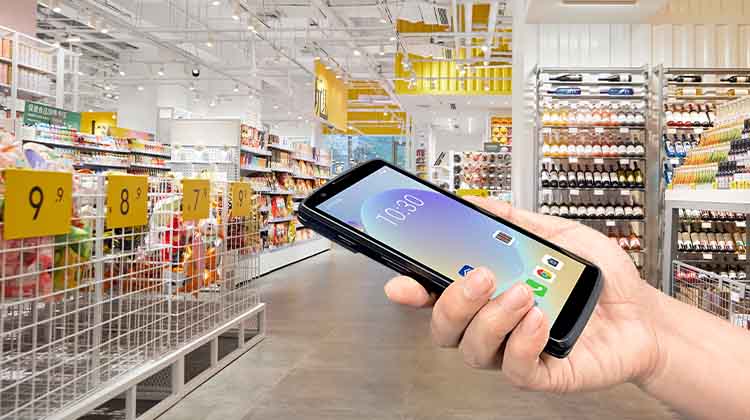
This guide will walk you through the key factors to consider when choosing handheld mobile computers, helping you make an informed decision.
1. Identify Your Needs
Before purchasing handheld mobile computers, it's crucial to define your specific requirements. Different industries and business operations demand varying features and performance levels. Consider the following aspects:
Industry Requirements: In manufacturing or warehousing, durability and long battery life are essential to withstand harsh environments. In retail, a lightweight design with seamless payment capabilities may be more important.
Functionality: Does your business require built-in barcode scanning, NFC, or GPS tracking? If your team frequently inputs data, a device with a virtual keyboard or stylus support can enhance usability.
Data Connectivity: Fast and reliable data transfer via Wi-Fi, Bluetooth, or 4G/5G is critical for many industries. Ensure seamless integration with your internal systems to maximize efficiency.
2. Choose the Right Operating System
Handheld mobile computers typically run on Android, Windows, or Linux, each offering different advantages:
Android: Open-source, widely supported, and ideal for businesses that rely on custom or third-party apps.
Windows: Best for applications requiring high computing power, especially those dependent on Windows desktop software. However, hardware compatibility and long-term updates may be a concern.
Linux: Highly customizable and stable but requires technical expertise for maintenance and development. When selecting an OS, consider your team's technical skills and long-term software support.
3. Hardware Specifications Matter
Processor & Memory: A powerful processor and sufficient RAM ensure smooth multitasking and high-performance operations.
Battery Life: Long battery life is essential, especially for fieldwork. Choose a PDA with extended battery capacity to avoid frequent recharging.
Durability: For industrial environments, opt for a device with a high IP rating (e.g., IP67) for water and dust resistance. Shockproof designs can help withstand drops and rough handling.
Display Quality: Screen size and resolution should match your work environment. If working outdoors, a high-brightness, anti-glare screen improves visibility.
4. Brand Reputation & After-Sales Support
Investing in a reputable brand ensures better product quality and long-term support.
Warranty Coverage: Check the warranty period and what it includes.
Technical Support: Reliable customer service can save time when troubleshooting issues.
Software Updates: Ensure ongoing support for system and security updates.
5. Price vs. Value
While price is an important factor, going for the cheapest option can lead to costly inefficiencies later. Focus on reliability, features, and long-term durability within your budget. Compare different models and request trial units before making a final decision.
After gaining a comprehensive understanding of the key factors in selecting a handheld mobile computer, how can these criteria be applied to actual choices? A model worth considering is the SEUIC CRUISE2 5G rugged mobile computer. This product addresses multiple key considerations mentioned in this guide through its design, serving as a reference for your decision-making process:
- Outstanding Connectivity and Performance: Its leading Wi-Fi 6E and 5G technology provide a low-latency, high-bandwidth connection experience for key industries such as manufacturing, utilities, and logistics, ensuring efficient integration with internal systems. Its equipped Qualcomm 4490 CPU and new-generation AI computing platform guarantee smooth operation of high-performance applications.
- Robust Data Capture Capabilities: The device supports reading barcodes as small as 3Mil, and can quickly read soiled or damaged barcodes. Its fast-moving scanning capability of up to 1.5 meters per second is highly suitable for dynamic operational scenarios such as warehouses and production lines mentioned in the guide.
- Long-lasting Battery Life and Rugged Design: The 5000mAh high-capacity battery supports up to 12 hours of continuous operation, and the battery is hot-swappable, meeting the needs for "long battery life" and uninterrupted business. Its rugged, three-proof design also meets the stringent requirements for high durability in industrial environments.
- Optimized Total Cost of Ownership (TCO): As emphasized in the guide's final point on balancing "price and value," the CRUISE2 5G, as a professional-grade device, contributes to reducing failure rates and maintenance costs in the long run due to its reliability and design tailored for enterprise environments. From a Total Cost of Ownership perspective, it may offer greater value than consumer-grade devices.
Founded in 2002, SEUIC Technologies Co., Ltd. has been committed to grasping core technologies, enhancing technological innovation, providing excellent self-owned brand products, including mobile computers, RFID readers, tablets, barcode scanners and fixed readers. With highly reliable products and efficient services, our products have been widely used in manufacturing, retail, logistics & transportation, healthcare and other industries. We provide frontline workers more durable real-time data collection tools, helping you do more thereby to catapult your productivity to the next level.
- Demystifying Manual Traceability Pains: How CRUISE2 5G Enables Barcode-Based Bidirectional Traceability2026-04-03
- Demystifying Slow Backroom Transfers: How UTouch 2-S Enables Second-Level Inventory Navigation2026-04-03
- Demystifying Quality Control Bottlenecks: How RFID Moves Towards Proactive Prevention2026-04-02
- How Handheld Computers Achieve End-to-End Traceability2026-04-02
- Demystifying Workstation Information Bottlenecks: How CRUISE2 5G Enables Paperless, Real-Time Operations2026-04-01