Brief Introduction
Imagine this: a batch of urgent customer orders is flowing through your production line. As a factory manager, can you immediately and accurately answer the following questions?
At which process stage is the order currently? Who is operating it?
On which finished product was a key component (e.g., a chip from a specific batch number) used?
Is there a bottleneck on the production line right now? Which station is slowing down the overall takt time?
In the finished goods warehouse, which specific product is about to expire its warranty and needs priority shipping?
If the answer is no, or if it relies on manual inventory checks, paper documents, and post-facto data entry for vague awareness, then your factory is operating within a massive "information black box." This lack of visibility directly leads to a series of persistent issues such as delivery delays, inventory backlogs, difficulty tracing quality incidents, and low asset utilization. In today's era pursuing flexible manufacturing, small-batch customization, and ultimate efficiency, traditional production tracking models are struggling to keep up.
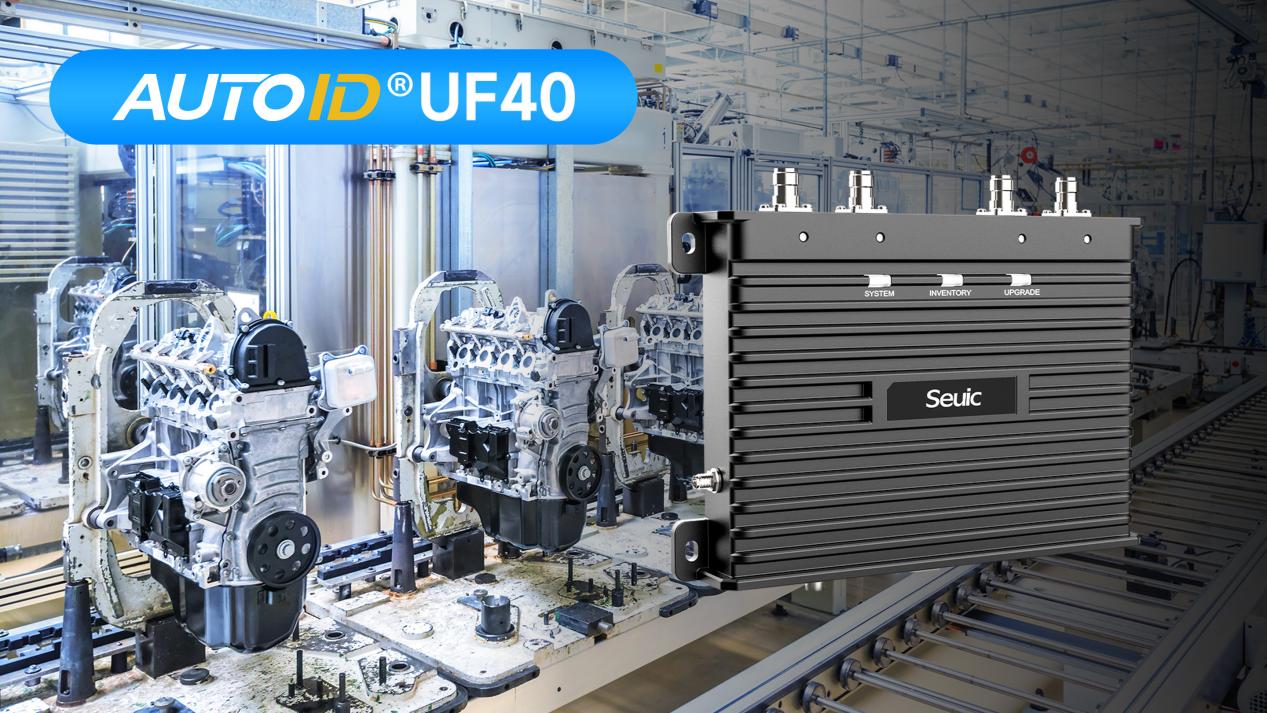
1. The Four Major Bottlenecks of Traditional Production Tracking Models
Before introducing RFID (Radio Frequency Identification) technology, the vast majority of enterprises relied on the following methods, which together formed the shackles constraining "real-time visibility":
Manual Recording and Paper Documents: Reliance on workers to manually record work orders, quantities, and times. Slow, error-prone, easily tampered with, with lagging information, and subsequent entry into the system is another error-prone process.
Barcode Scanning: A significant advancement over paper documents, but requires "line-of-sight alignment" and scanning items one by one, making its efficiency a bottleneck in front of high-speed assembly lines. Barcodes are susceptible to damage, cannot be read in batches, and do not carry information themselves, relying on a backend database.
Station-Based Point Data Collection: Setting up data collection points at key workstations. This only provides "point" information, unable to know the status, time, and path of materials moving betweenstations, leaving monitoring blind spots.
Discrete Information System Silos: Data is not synchronized between systems like MES (Manufacturing Execution System), WMS (Warehouse Management System), and ERP (Enterprise Resource Planning), forming "information silos." Production progress, inventory status, and quality data cannot converge in real-time into a unified, accurate panoramic view。
The essence of these bottlenecks is the passivity, discreteness, and lag of data collection. We need a technology capable of automatically, in real-time, in batches, and accurately capturing the movement and state changes of the physical world. RFID readers are the core carriers of this mission.
2. RFID Readers: The "IoT Sensory" Neurons of the Production Line
An RFID system mainly consists of RFID tags (attached to materials, work-in-progress, finished goods, tools, carriers) and RFID readers (fixed or mobile). You can think of each RFID tag as a "digital ID card" for an item, and the RFID readers as the "sensory neurons" distributed across production lines, warehouses, and entry/exit points.
2.1 How Do Readers Achieve "Real-time Tracking"?
Contactless, Non-Line-of-Sight Batch Reading: RFID readers automatically identify all RFID tags within a range of several meters (depending on frequency and power) via radio waves, requiring no alignment or scanning items one by one, completing data collection in milliseconds and completely liberating manpower.
Automated Data Collection Throughout the Entire Process: Deploy fixed readers at key nodes (e.g., warehouse doors, production line start points, various process stations, inspection stations, packaging areas, finished goods shipping docks). When tagged items pass by, their identity, location, and timestamp are automatically recorded and uploaded to the system, forming a continuous movement trail.
Deep Binding of Status and Environment: Ultra-High Frequency (UHF) RFID readers can not only identify "who," but also assist in judging "roughly where" (zone localization) by reading signal strength (RSSI), etc. Combined with sensors, tags can also record environmental data like temperature and vibration, enabling more granular monitoring.
The core value shift this brings is: from "post-facto entry and query" to "real-time perception and alerting during the process," and from "static inventory records" to "dynamic full-process traceability."
3. Five Strategies: Deploying RFID Readers to Achieve Real-Time Visibility and Traceability
Based on the characteristics of RFID readers, implementing production tracking can follow these five strategies:
3.1 Transparent Full-Process Tracking of Work-in-Progress (WIP)
Deploy RFID readers at each workstation on the production line to automatically capture the entry and exit times of each product unit (or carrier). The system can display in real-time:
Production Progress Dashboard: Precisely showing the current process and dwell time for each order and product.
Bottleneck Identification: Automatically analyzing processing times at each station, providing real-time alerts for congestion points.
Error-Proofing and Configuration Verification: Readers scan product tags and compare them with the BOM (Bill of Materials) to ensure accurate assembly of components.
Search intent fulfilled: Provides production supervisors and operations managers with tools for real-time progress monitoring and bottleneck analysis.
3.2 Lean Management of Materials and Assets
Tag raw material reels, valuable tools, reusable carriers (e.g., shelves, totes).
Smart Warehousing: Deploy readers at warehouse entrances/exits for automatic recording of material in/out, achieving real-time, accurate inventory.
Tool & Asset Tracking: Quickly locate high-value specialized tools and fixtures, reducing search time and loss rates.
Carrier Circulation Management: Track the location and empty/full status of totes and pallets, optimizing the efficiency of logistics container usage.
Search intent fulfilled: Provides warehouse managers and asset administrators with efficient asset location and inventory management solutions.
3.3 Building an End-to-End Quality Traceability System
Associate the product's unique ID (bound to the RFID tag) with key production data (operator, workstation, time, material batch number used, process parameters, inspection results).
Forward Traceability (Tracking Destination): When an issue is found with a batch of raw material, instantly locate all finished products that used that batch.
Reverse Traceability (Tracking Source): When a quality complaint arises for a finished product, retrieve its complete production history with one click to pinpoint the problematic stage.
Compliance Records: Automatically generate traceability records compliant with industry regulations (e.g., automotive, pharmaceutical, food).
Search intent fulfilled: Provides quality control and compliance departments with powerful, rapid traceability tools to address quality incidents and audit requirements.
3.4 Automated Packaging, Sorting, and Shipping
Deploy high-performance RFID tunnel readers at packaging lines and shipping docks.
Automatic Packing Verification: As products enter a carton, the reader automatically identifies all products inside, comparing them with the order to prevent wrong or missing items.
High-Speed Sorting: On sorting lines, readers automatically identify parcel destinations, guiding automated sorting systems, greatly enhancing efficiency.
Automatic Outbound Verification: As loaded pallets pass the exit, automatically scan all goods, performing a 100% check against the shipping manifest to ensure shipping accuracy.
Search intent fulfilled: Provides logistics centers and e-commerce fulfillment centers with automation solutions to improve sorting/shipping accuracy and speed.
3.5 Deep Integration with Systems like MES, ERP, WMS
The real-time data collected by RFID readers is seamlessly fed into the enterprise's existing management systems like MES, ERP, and WMS via middleware or APIs. Drive System Status Updates: Actions like production completion, receiving, and shipping, once automatically sensed, drive real-time updates to inventory, financial, and other data in backend systems.
Provide Decision Support: Transform real-time production data into visual dashboards, alerts, and analytical reports, providing data support for management decisions.
Build a Digital Twin: Synchronize the physical production flow with the data flow in the information system in real-time, building a workshop-level digital twin.
Search intent fulfilled: Provides IT heads and operations directors with system integration ideas to ensure maximum ROI from RFID investments and break down information silos.
4. Beyond the Factory: Cross-Industry Application Scenarios of RFID Reader Tracking
The value of RFID readers extends far beyond traditional discrete manufacturing.
Retail and Apparel Brands: Deploy readers in store backrooms and sales floors to achieve real-time, item-level inventory counts, solving out-of-stock and shrinkage issues, and supporting omnichannel operations. Customer preferences can be recorded when items are picked up in fitting rooms.
Logistics and Warehousing (3PL/Courier): Deploy readers at distribution center entrances, sortation lines, and loading docks to automatically track the flow of parcels, pallets, and roll cages, achieving efficient asset circulation and end-to-end cargo visibility.
Healthcare and Pharmaceuticals: Track high-value medical devices, drug batches, specimens, and patient records to ensure safety, compliance, prevent loss, and improve operational efficiency.
Utilities (Water, Electricity, Gas): Tag field inspection equipment and meters with RFID labels. Inspectors use handheld readers to "clock in," ensuring proper inspection rounds and automatic data logging.
Government and Field Enforcement: Manage fixed assets, archival documents, or conduct automatic identification and access control for personnel/vehicles in specific areas.
5. Success Case Evidence: From Concept to Value Realization
The global motorcycle manufacturing giant Haojue-Suzuki once suffered from inefficient production line data collection. Traditional manual recording was not only time-consuming but also became a bottleneck for production management and quality traceability. To address this, Haojue introduced an automated data collection solution based on fixed RFID readers. The system automatically reads product RFID tags at key production points, achieving real-time, full-process status monitoring and precise quality binding. This transformation delivered an overall efficiency improvement of over 70%, significantly optimizing operational costs. For more case details, click here
The core value of RFID reader-based production tracking lies in achieving the real-time, automatic, and precise fusion of the physical world's "material flow" with the information world's "data flow." It is not merely a tool upgrade replacing barcodes, but the cornerstone for building a real-time sensing, transparent, visible, and data-driven intelligent operational system.
Founded in 2002, SEUIC Technologies Co., Ltd. has been committed to grasping core technologies, enhancing technological innovation, providing excellent self-owned brand products, including mobile computers, RFID readers, tablets, barcode scanners and fixed readers. With highly reliable products and efficient services, our products have been widely used in manufacturing, retail, logistics & transportation, healthcare and other industries. We provide frontline workers more durable real-time data collection tools, helping you do more thereby to catapult your productivity to the next level.
- Demystifying Manual Traceability Pains: How CRUISE2 5G Enables Barcode-Based Bidirectional Traceability2026-04-03
- Demystifying Slow Backroom Transfers: How UTouch 2-S Enables Second-Level Inventory Navigation2026-04-03
- Demystifying Quality Control Bottlenecks: How RFID Moves Towards Proactive Prevention2026-04-02
- How Handheld Computers Achieve End-to-End Traceability2026-04-02
- Demystifying Workstation Information Bottlenecks: How CRUISE2 5G Enables Paperless, Real-Time Operations2026-04-01